
Reviewed · PALMA CATHEDRAL TICKETS
Palma Old Town & The Cathedral of Mallorca with Mallorcan pastry
Palma is one of those cities where you can get the big sights fast and still feel the daily life. This old town plus Cathedral walk is interesting because it strings together royal power, religious art, and courtyard architecture in a route you can actually digest in one morning. You finish at the municipal market, so it feels like sightseeing that turns into a real plan for your next stop.
I really like two things about this tour. First, skip-the-line access and Cathedral entry are included, so you spend your time looking, not waiting. Second, you get a small break with Mallorcan traditional pastry snacks while your guide keeps the story moving through the neighborhoods.
One thing to consider: not everything you’ll see is ticketed. Some sites during the route list admissions as not included, so expect a mix of guided viewing and exterior stops. Also, the info you’re given is a bit mixed about headsets, so if you rely on audio support, plan accordingly.
Key highlights you should care about
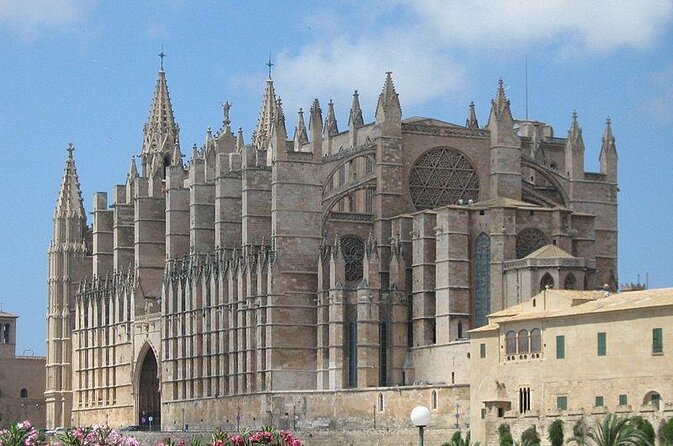
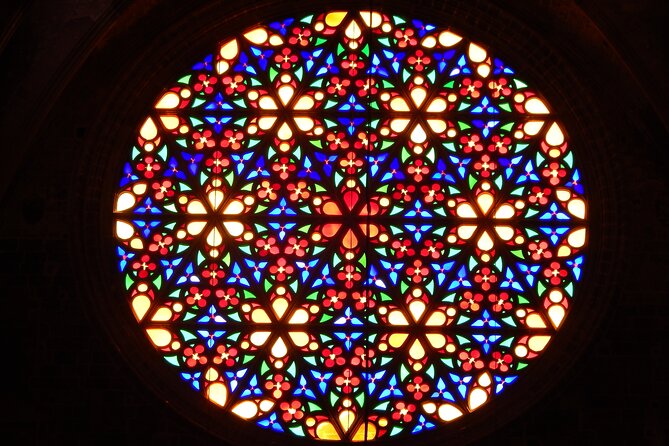
- Skip-the-line Cathedral tickets included, which saves time for one of Palma’s busiest stops
- Small group max 12, so you can ask questions and keep up without feeling rushed
- Patios and Palau architecture in the same walk, especially Palau de l’Almudaina and the Patio Mallorquín sites
- Jewish quarter focus with the Xuetas, plus an interpretation center visit on weekday mornings when open
- Modernism details in Old Palma, including a façade known for a stone face at Can Forteza Rey
- A built-in pastry break, with traditional snacks timed into the route
Why Palma Old Town and the Cathedral fit together so well
If you only have a couple hours in Palma, it’s easy to end up in a loop: you see the Cathedral, take a few photos, then wander without direction. This tour works because it starts you at the sea side and then walks inward to the places that shaped the city. You’re not just hopping from monument to monument, you’re learning how Palma’s power, art, and communities connect.
Your day centers on the Catedral de Mallorca, but the most satisfying part is the lead-in. The guide points out what you’re looking at long before you enter the Cathedral, which makes the building’s details feel earned instead of random. And because the group is kept to a maximum of 12, you tend to get more back-and-forth than you would on a bigger bus-style walk.
This is also a strong pick if you like religious art, but you also care about modern design. The route includes courtyards, a royal palace, and modernist façades, plus a focused segment on Palma’s Jewish history. Even if you’re not an art-history person, you’ll come away knowing what to notice.
More Palma Cathedral tickets to compare:
- Palma: Cathedral of Mallorca Skip-the-Line Entry Ticket
★ 4.6 · 14,386 reviews - Palma de Mallorca: City Walking Tour with The Cathedral
★ 4.0 · 657 reviews - Palma de Mallorca: Old Town and Cathedral Tour
★ 4.2 · 268 reviews
Finding your guide at Parc de la Mar and getting your bearings fast
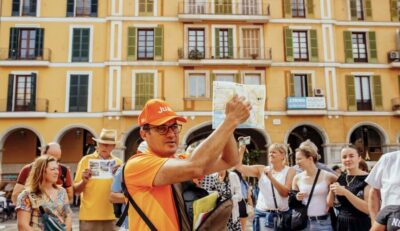
You start at Tourist Information on Carrer del Moll, 3, in the city center. The meeting point is easy to spot because your guide waits in front of the tourist office with an orange umbrella. That small detail matters. Palma has lots of people and narrow streets, and this avoids the awkward first 10 minutes of everyone searching.
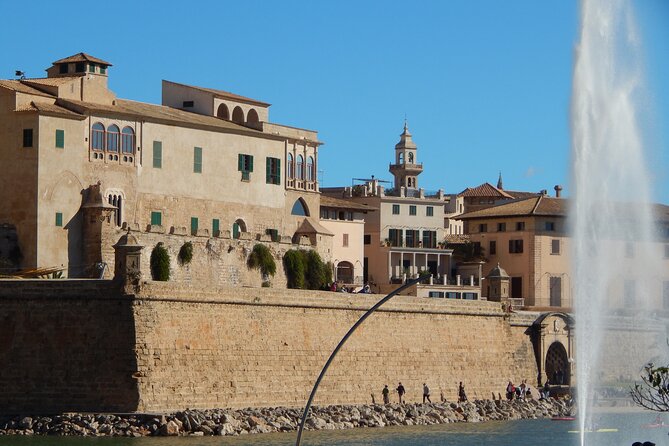
From there, the walk begins around Parc de la Mar, a spot that sets the mood. You get views toward the waterfront while you’re learning how the city’s core developed. This is a smart move because the history told here has a visual anchor.
Then the route heads toward Palau de l’Almudaina. The stop is short, but the promise is clear: history, architecture, and anecdotes tied to the royal family. In a city where buildings often look similar at street level, a palace stop like this helps you read the city. You start noticing which structures were built to impress and control, and which were built for community life.
Practical note: the tour is about 2 hours 30 minutes total. It’s not a sit-down museum visit, so expect a comfortable walking rhythm and quick orientation explanations.
Palau de l’Almudaina: royal power you can see, not just read
Palau de l’Almudaina is one of those places where the story depends on context. If you walked past on your own, you might register it as an impressive building. With a guide, you start connecting it to how Palma was governed and why royal spaces were designed the way they were.
This is a great moment to pay attention to contrasts. Palma’s old streets can feel uniformly medieval, but places like Almudaina signal a more formal, state-level history. Your guide will also add the human scale through anecdotes, which tends to be the difference between facts and something you remember later.
This stop has an important limitation: admission is not included. That doesn’t mean you’re shortchanged, but it does mean your experience there is more about guided orientation and the parts accessible within the tour’s time window. If you’re the type who wants every interior room, plan that the Cathedral is the main “ticketed” priority in this itinerary.
Entering the Catedral de Mallorca with skip-the-line time
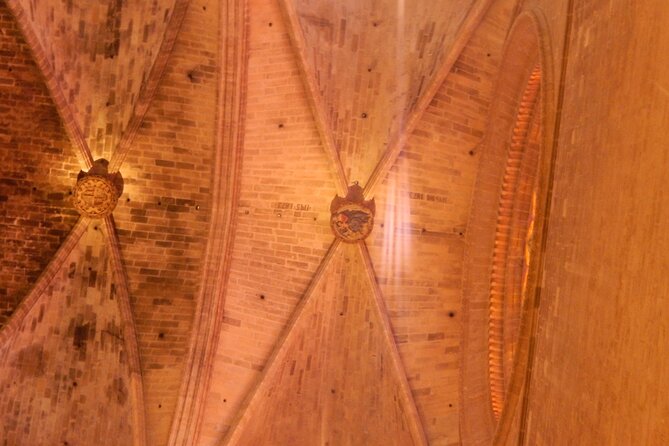
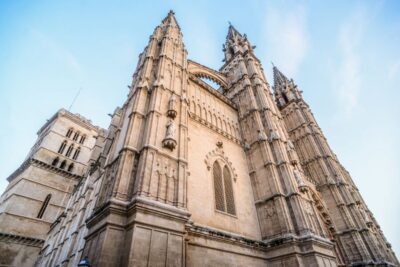
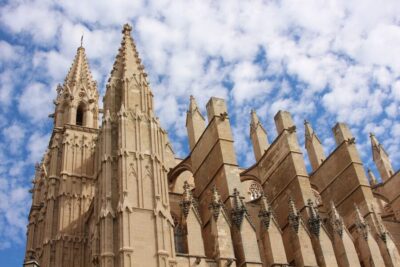
The Cathedral of Mallorca is the obvious headline, but the way it’s handled here is what makes it feel worth it. Your tour includes tickets to the Catedral de Mallorca, and it also includes skip-the-line entry. In plain terms, you get to spend more time inside looking at details instead of waiting outside.
The Cathedral stop is long enough to matter: about 30 minutes. That gives you breathing room to follow what your guide points out, and it’s not so long that you get bored. The guide focuses on history, curiosities, and the last changes to the Cathedral. That mix is useful because it covers both the traditional “what it is” and the practical “how it looks now.”
Here’s how I’d approach the visit if you want the most from it. Listen for what the guide tells you to look at, then quickly re-check one or two elements yourself. With only half an hour, your best strategy is depth over breadth: pick one side chapel detail, one architectural feature, and one place your guide emphasizes.
Also remember, this part of the tour is the ticketed core. The rest of the stops are often exterior viewing or courtyard-style access, but the Cathedral is where you’ll likely feel the biggest payoff for the included price.
More Palma old town walks:
- Palma de Mallorca: Guided Tour of the Old Town
★ 4.9 · 822 reviews - Palma de Mallorca: Old Town Atmospheric Evening Tour
★ 4.8 · 706 reviews - Palma de Mallorca Old Town Guided Bike Tour (Small Groups)
★ 4.6 · 563 reviews - Palma de Mallorca: Foodie Walking Tour of the Old Town
★ 4.6 · 372 reviews
Courtyards and Patio Mallorquín stops: the quiet magic of Palma
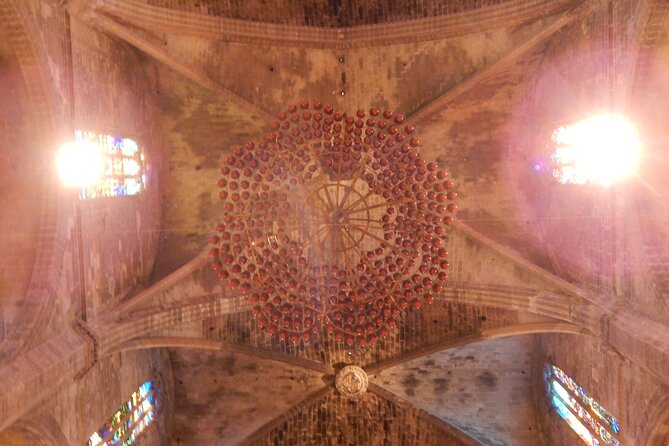
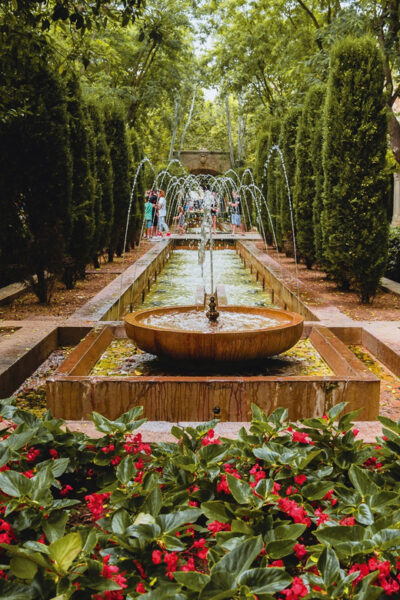
Palma’s patios are where the city turns from postcard to lived-in. The tour includes multiple stops tied to Patio Mallorquín style spaces, especially around Ca’n Oms, Can Bordils, and Can Vivot.
- Ca’n Oms is an early Patio Mallorquín stop, with description of the building inside and outdoors. It’s brief, but that’s part of the point. You see the idea quickly, then you move on so it doesn’t drag.
- Can Bordils is one of the key patio moments, and it’s also tied to a deeper historical layer.
At Can Bordils, the tour includes an additional angle: the interpretation center of the Jewish quarters of Palma. Importantly, this is not always available. The center visit is noted as only in the week and in the mornings. So if your tour day is outside that window, you’ll still get guided context, but the interpretation center itself may not be open.
And yes, the Jewish history part matters here. Your guide covers the history of the Jewish community in Mallorca and mentions the Xuetas. That name is a good prompt for you to ask yourself a simple question while you’re listening: why do family and community histories leave marks in architecture, street neighborhoods, and local traditions? You’re not just learning that Jews lived here, you’re learning how their legacy became part of the city’s identity.
Then you hit Can Vivot, described as one of the best-preserved patios in Palma. Even if you’re not a courtyard person, a well-preserved patio changes how you understand the city. It’s light, texture, and scale, and it’s one of the easiest places to see why Palma attracted different communities and why domestic architecture mattered.
These patio stops are also time-efficient. Some admissions are marked as free and some are not included, so you may spend more time “looking with the guide” and less time managing tickets. Either way, they break up the walk nicely.
Santa Eulàlia and Reial Covent de Sant Francesc: faith with local flavor
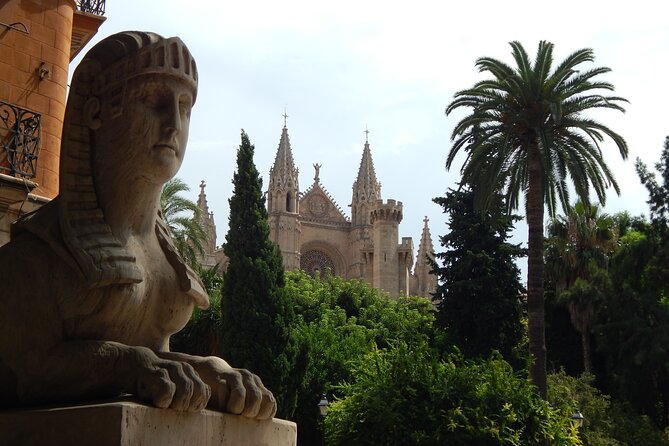
Not every religious stop is about grand interiors. Santa Eulàlia is a parish church stop that focuses on local expressions. The time here is about 10 minutes, and admissions are not included. That means you’re likely using the guide’s interpretation to make sense of what you see from the outside or any accessible areas during the tour window.
If you’re trying to decide whether this kind of church stop is your style, here’s the clue: you don’t need to be a theology person. You just need curiosity about why local communities build, decorate, and use sacred spaces the way they do. The guide’s job is to translate that into what you can actually notice in the street scene.
Then comes Reial Covent de Sant Francesc, the Franciscan convent. The tour frames it around the idea that different characters of Mallorca were Franciscans, and it includes an interesting historical hook: learning about one of the cofounders of the USA. The guide ties this story to the place, so it becomes more than a random trivia moment. It’s the kind of detail that helps you feel the wider connections between local European history and global stories.
Again, admissions here are marked as not included. So think of this stop as part guided viewpoint and part explanation, rather than a guaranteed full interior visit.
Modernism in Old Palma: Can Corbella and Can Forteza Rey
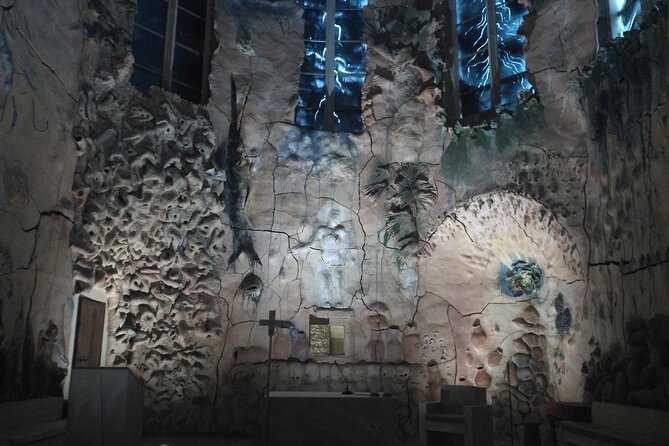
Here’s where the tour surprises you if you think Palma is only medieval and baroque. It includes modernist architecture stops, including Can Corbella and Can Forteza Rey.
Can Corbella is described as a modernist building and part of the Jewish quarter of Palma. That pairing is excellent because it forces a broader timeline. You get the sense that the Jewish quarter didn’t only exist as a medieval memory, it also influenced later urban development.
Then you get Can Forteza Rey, marked as Catalan Modernism with a “face.” The stop is about 7 minutes and admissions are not included. Short stops are normal on this itinerary, and they work best when the guide tells you what to look for. In this case, the “face” detail is your anchor. The architecture is the story, and the guide helps you see the sculpture or façade feature without you needing to guess.
If you’re the type who likes photos, modernist façades in Palma give you better angles than plain old stone walls. But even if you’re not, the modernism stops change your mental map. You start realizing Palma is a living city, not only a preserved set.
Ajuntament de Palma, Plaça Major, and the Banc de sino fos
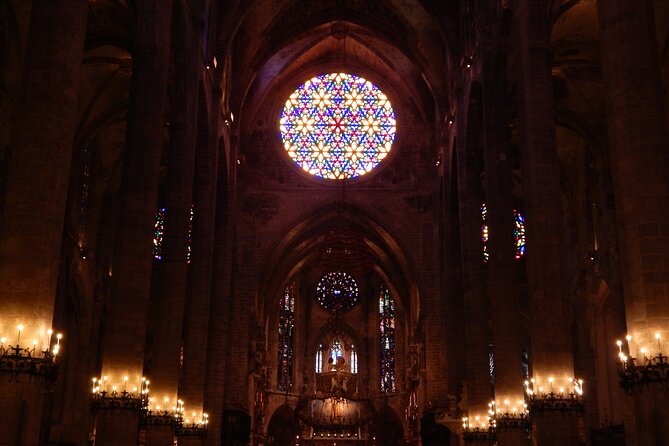
Old Palma’s public spaces are where you get a sense of rhythm. Two of the tour’s stops highlight that: Ajuntament de Palma and Plaça Major.
At Ajuntament de Palma, you get time around the town hall and the main square, including el Banc de sino fos. This is one of those named features that sounds quirky until your guide points it out. Then it becomes a conversation piece and a quick example of how local culture gets written into objects and public design.
You’ll spend about 15 minutes here, which is long enough to actually absorb the square’s mood and the guide’s explanation. Then the tour continues with Plaça Major, again about 7 minutes, focused on surroundings, history, and last changes.
Why do I like these public square stops? Because they’re a break from “building-as-object” and shift you into “building-as-community.” After the Cathedral and patios, the squares feel lighter. You’re still learning, but it’s learning you can do while watching daily life unfold.
Finishing at Mercat de S’olivar: turn the walk into a meal plan
The tour wraps at Mercat de S’olivar on Plaça de l’Olivar, very close to Plaza España. This ending is smart value. You finish with something you can use right away, especially if you want to eat without another round of planning.
The market is listed as the final destination, with the tour ending after about 2 hours 30 minutes. There’s also a good chance you’ll have worked up an appetite by then. The tour already includes pastry snacks, but a market finish is ideal for whatever you feel like next.
If you want to stretch the day, plan one more activity in the immediate area rather than crossing town. You’ll already be oriented, and you won’t lose time.
Price and value: what $50.33 includes, and what it doesn’t
At $50.33 per person for roughly 2 hours 30 minutes, this tour is priced like a serious guided experience, not a casual stroll. What you get for the money is pretty clear and practical:
Included:
- Official guide
- Cathedral tickets
- Skip-the-line access
- Mallorcan traditional pastry snacks
Not included:
- Some other site admissions are listed as not included during parts of the route.
- Headsets are listed as not included in the details you receive, even though the tour overview mentions headsets. If audio is important for you, take that discrepancy seriously and plan to rely on your own listening setup.
When you weigh it out, the biggest cost justification is the Cathedral ticketing and skip-the-line benefit. Mallorca’s Cathedral can be a time sink, and that kind of included entry tends to make the price feel fair. The patios and Old Town orientation are also part of what you’re paying for. They aren’t just photo stops, they’re guided stories in spaces you might not seek out on your own.
If your priority is strictly interiors, you might feel the “admission not included” notes more strongly at the churches and some palaces. But if your goal is a guided understanding of Palma’s layout and architecture, the price looks like a good match.
Who should book this Palma Old Town and Cathedral tour
This tour is best for you if you:
- Want a guided Cathedral visit with time saved via skip-the-line
- Like religious art and architecture, but also want patios and modernist streets
- Prefer a small group max 12 to keep it interactive
- Enjoy story-driven city walks with specific details, like the Xuetas and the Franciscan link to a US cofounder
It’s also a smart fit for first-timers in Palma. It helps you understand where the city’s power centers are, and it gives you named places you can revisit later on your own.
Two practical tips to make it smoother:
- Wear shoes for walking. Even though each stop is short, you cover enough ground to feel it by the end.
- Keep your eyes on the guide’s cues. With limited time at each location, the guide’s “look here” moments are what turn sightseeing into learning.
Should you book this Palma Cathedral and Old Town tour?
Yes, I’d book it if your schedule can handle a single longer walking morning and you care about seeing Palma with structure. The included Cathedral tickets and skip-the-line access are the anchor that makes this more than just a nice walk. Add in the small group size and the pastry snack, and you get a strong value mix of comfort and depth.
Skip it only if you strongly dislike walking, or if your dream day is 100 percent interior access at every stop. This tour is designed as a guided city circuit, with the Cathedral as the main ticketed interior moment and patios and streets as the rest of the experience.
If the weather isn’t great, the tour notes say it depends on conditions. If it does run, you’re in for a well-paced snapshot of Palma that connects the sea, the royal palace world, the Cathedral’s art, and the patios and neighborhoods that give the city its personality.
FAQ
What is the duration of the Palma Old Town and Cathedral tour?
The tour lasts about 2 hours 30 minutes.
Where do I meet the guide, and what time does it start?
You meet at Tourist Information, Carrer del Moll, 3, Centre, Palma, at 10:30 am. The guide is in front of the tourist office with an orange umbrella.
Is the Cathedral of Mallorca ticket included?
Yes. Tickets to the Catedral de Mallorca are included, and skip-the-line entry is part of the tour price.
Are headsets included?
The tour overview mentions headsets, but the tour details state that headsets are not included. It’s wise to plan as if you may need to rely on normal hearing.
What does the tour include besides the Cathedral?
You also get an official guide and Mallorcan traditional pastry snacks. The route covers Old Town sights including palaces, patios, church exteriors, and market surroundings.
How big is the group?
The tour has a maximum group size of 12 travelers.
Recently reviewed around Mallorca
- Guided Kayak & Hike from Sant Elm to Sa Dragonera★ 5.0 · 28 reviews
- Western Water Park, Entrance tickets★ 4.0 · 30 reviews
- Sailing Flavors, Gastronomy and Relaxation at Sea★ 5.0 · 15 reviews
- 60 minutes Jetski Rental in Alcudia Bay★ 4.5 · 33 reviews
- Yoga and Brunch on the beach★ 5.0 · 9 reviews
- Wine tasting with wines from the smallest wineries in Mallorca★ 5.0 · 10 reviews
- Western Water Park Day Trip from Mallorca★ 3.5 · 6 reviews
- Sa Clasta Wine Tours, Mallorca★ 4.5 · 20 reviews
Palma Cathedral Tickets, compared.
Cathedral of Mallorca Skip-the-Line Entry Ticket
Read our review →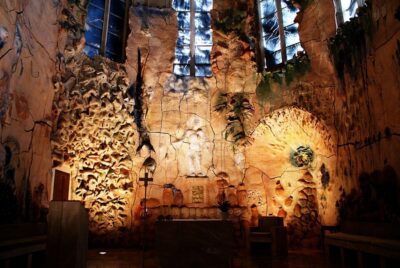
Palma, Cathedral & Valldemossa: Guided walking Tour
Read our review →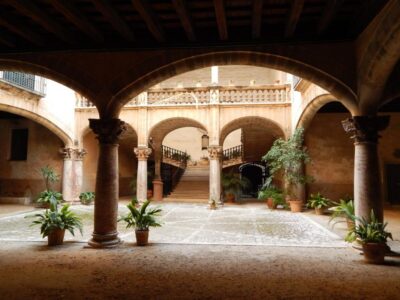
City, Cathedral and Valldemossa with pick up service
Read our review →
Browse the lists this tour appears in