
Reviewed · PALMA OLD TOWN WALKING TOURS
Palma de Mallorca Private Guided Walking Tour
Palma works best when you see it in layers, and this private walking tour is interesting because it links Talayotic and Roman-era threads to the city’s Moorish and Christian chapters, all without losing sight of the modernist buildings around you. I love the way the route keeps its promises, moving from the 17th-century Ayuntamiento into medieval churches and a Gothic convent. I also like the payoff of ending at the Banys Àrabs, where Palma’s Moorish heritage is not just described, it is right there in front of you.
One possible drawback is also clear: with only 1.5 hours, you get a focused orientation, not a slow, in-depth day. And entrance fees are not included, so plan a little extra if you want to go inside every stop.
Key things I’d prioritize on this Palma walking tour
- Ayuntamiento meeting point at Plaça de Cort (Plaça de Cort, 1), right where local life and history overlap.
- A giant wooden roof moment at the 17th-century town hall, which helps you read Palma fast.
- Santa Eulalia and San Francisco give you medieval Christian architecture in a tight, logical order.
- A museum stop focused on Mallorca’s treasures, so your walk has more than street views.
- Banys Àrabs (Arab Baths), one of the few surviving Moorish remnants you can experience on foot.
- Private guiding with on-the-spot customization, so you can steer the pace toward what you care about.
Why Palma’s layered story fits in a 1.5-hour private walk
Palma de Mallorca can feel like a lot when you first arrive. Streets curve, landmarks appear at different angles, and it is easy to miss the connections between eras. This tour is built for that exact problem. You walk a compact route through the city’s big historical signposts, and your guide ties them together so you leave with a clearer mental map.
Because it is private and your guide stays with your group only, you can ask follow-up questions as you go. That matters in a place like Palma, where Roman, Moorish, and Christian influences show up in different forms, from major buildings to small remnants tucked into the street plan.
The other reason this time window works is simple: 90 minutes is enough to orient you, especially if you are later planning dinner, shopping, or a second outing. You can turn what you learn into smart choices the rest of the day.
More Palma old town walks:
- Palma de Mallorca: Guided Tour of the Old Town
★ 4.9 · 822 reviews - Palma de Mallorca: Old Town Atmospheric Evening Tour
★ 4.8 · 706 reviews - Palma de Mallorca: City Walking Tour with The Cathedral
★ 4.0 · 657 reviews
Start at Plaça de Cort, then use the Ayuntamiento as your orientation tool
You meet at the seating area of the Ayuntamiento, on Plaça de Cort, 1 (07001 Palma). That location is not random. It puts you at the city’s political heart, while still keeping the historic streets within easy walking distance.
I like starting here because the Ayuntamiento gives you a visual anchor. The tour specifically points out the 17th-century Ayuntamiento and its famous giant wooden roof. Even if you are not a building nerd, that roof is a quick way to understand how Palma has long blended public power with architecture that people remember.
Practical tip: arrive a few minutes early and take a quick look around before the guide starts speaking. If you get your bearings first, you will catch more details as you move.
The Ayuntamiento stop, why that giant roof is more than a photo moment
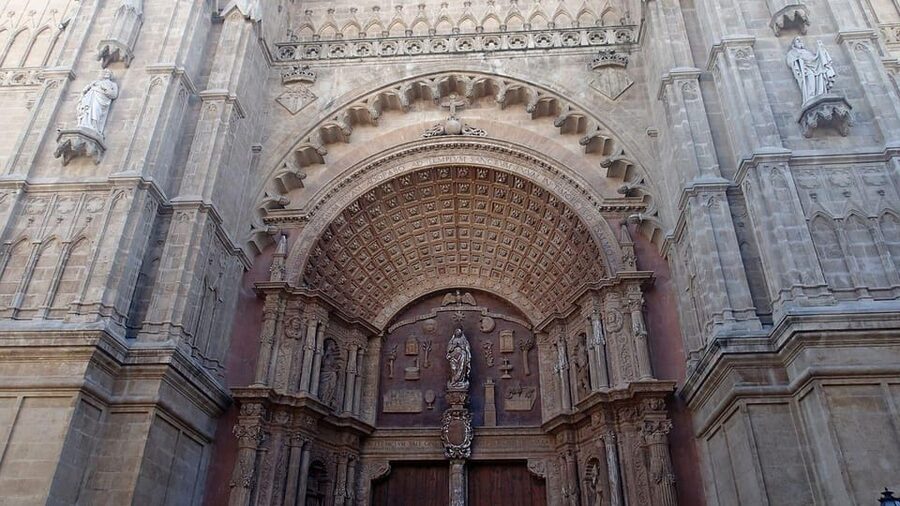
The Ayuntamiento is a good first stop because it signals that Palma is not only about ancient ruins. It is also about how the city governs, celebrates, and builds its identity over time.
During this part of the walk, you will get context for Palma as a working capital, not just a set of scenic streets. Your guide connects the town hall to the broader story you will keep hearing throughout the tour: Palma’s shifts from older roots into eras of new rulers, new faiths, and new styles.
Also, because this is a private group, you can ask for the kind of detail that fits your interests. If you want architecture, you can keep attention on the building features. If you want historical context, you can steer your guide toward what changed and when, without waiting for a larger group to catch up.
Santa Eulalia Church, medieval faith you can still read in the streets
From the town hall, the tour moves you into the medieval core of Palma, including the Church of Santa Eulalia. This stop is dedicated to the martyr and patron saint of Barcelona, and that detail matters. It is a reminder that church history in Mallorca is not isolated. It is connected to wider regional traditions.
I like this stop for two reasons. First, it helps you see how medieval Palma expressed its values through architecture and religious dedication. Second, it is one of those buildings that makes your walking route feel purposeful, because the streets around it start to make more sense.
Possible drawback to keep in mind: like many historic churches, you may be limited by what you can see depending on access and rules on the day. Your best move is to focus on the areas you can actually view, and let the guide point out what you would otherwise miss at street level.
More walking tours in Mallorca:
- Palma de Mallorca: Foodie Walking Tour of the Old Town
★ 4.6 · 372 reviews - Palma, Cathedral & Valldemossa: Guided walking Tour
★ 4.1 · 182 reviews - Private walking tour in Palma de Mallorca with local guides.
★ 5.0 · 182 reviews - 2-Hour Private Walking Tour Through Palma’s Jewish Quarter
★ 5.0 · 66 reviews
The Gothic Convent of San Francisco, a practical lesson in medieval structure
Next up is the Gothic Convent of San Francisco, identified as a 13th-century site. Convents can feel complicated at a distance, but on foot, you get a clearer sense of how religious life shaped street space, buildings, and the rhythm of the neighborhood.
I find Gothic convents especially useful on a short tour because they offer visible clues about how design aimed to shape experience, from verticality to the way parts of the complex connect to surrounding streets. Even if you do not memorize architectural terms, the guide’s explanation helps you recognize why the building looks the way it does.
What to do here: slow down for a minute and let your eyes adjust. Convent complexes often reward you for doing that small pause, because details show up as you change angles.
Museum time, Mallorca treasures that turn street history into something you can hold
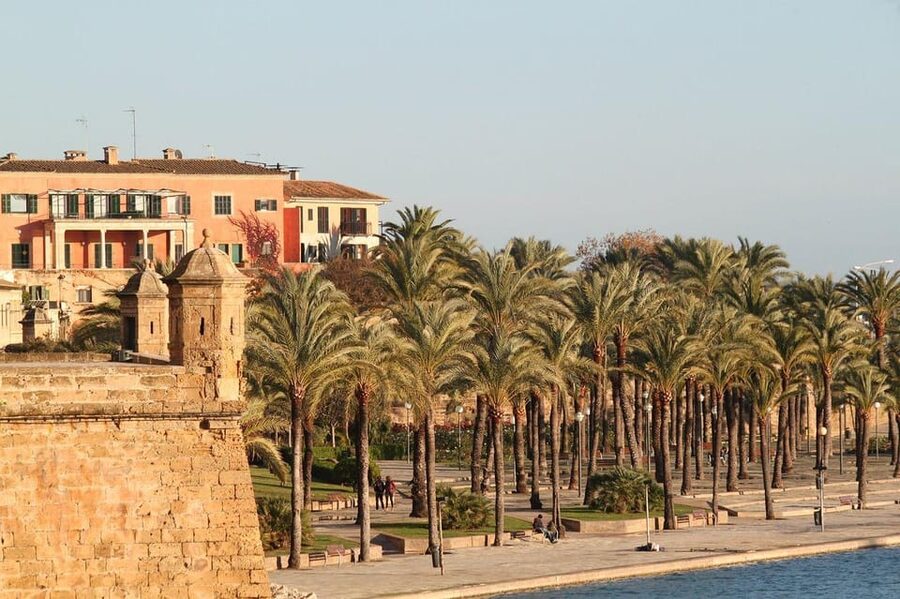
The tour includes a museum stop, described as a place to discover Mallorca’s treasures. This is valuable because it changes the pace. After churches and older monuments, museum time gives you a chance to see objects and interpretations that the streets alone cannot show.
In a 1.5-hour experience, the museum stop is probably brief, so you should treat it like a highlight sampler. If you have a theme in mind, tell your guide early. You might want religious art, local history items, or anything tied to Palma’s layered story. With a private guide, you can usually focus the visit toward what you care about most.
Quick mindset shift that helps: museums do not replace the outdoor stops here. They complete the story the outdoor buildings start.
Banys Àrabs, the Moorish heritage stop that feels real
One of the main highlights is the Banys Àrabs, or Arab Baths. The tour notes them as one of the few remnants of surviving Moorish heritage in Palma. That detail is exactly why this stop is so powerful on a short schedule. You are not just seeing a style. You are seeing a survival.
I like how this part of the tour makes the Moorish chapter tangible. After you have walked through medieval Christian landmarks, switching to a Moorish remnant creates a contrast that helps your brain file information faster. You remember the shift because you can stand in the space and picture how life might have worked there.
What to watch for: focus on the guide’s explanation of the baths as a remnant, rather than trying to fully interpret every element yourself in limited time. If you try to do everything alone, you will miss the best bits of interpretation.
Cathedral Santa Maria of Palma and La Almudaina, skyline moments that tie it all together
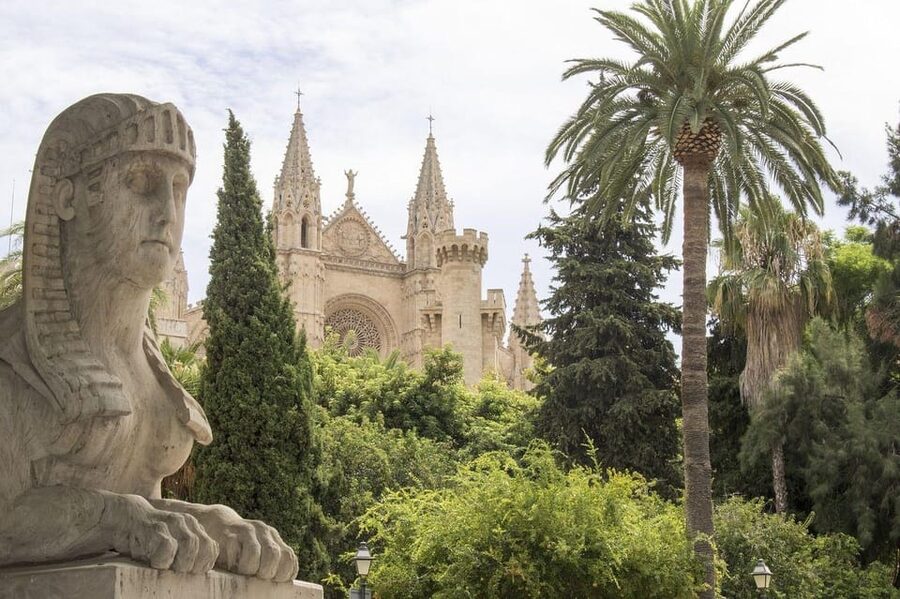
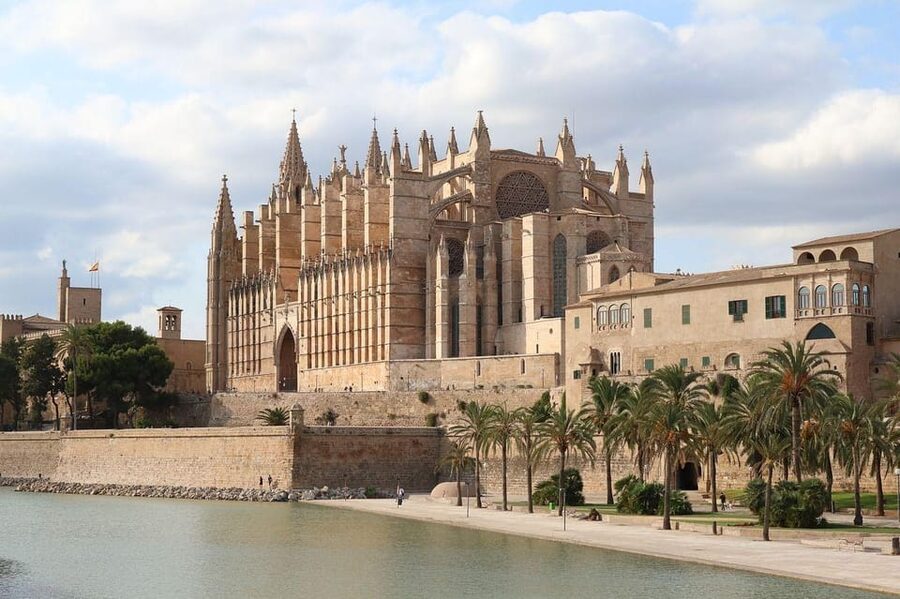
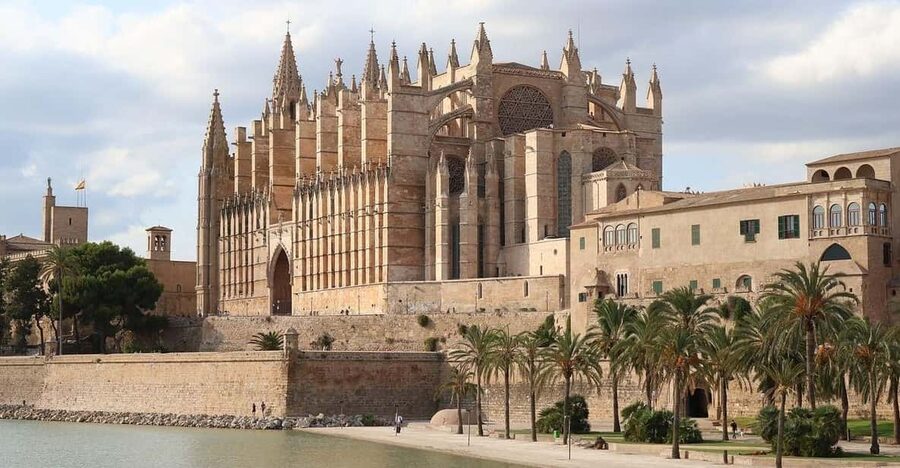
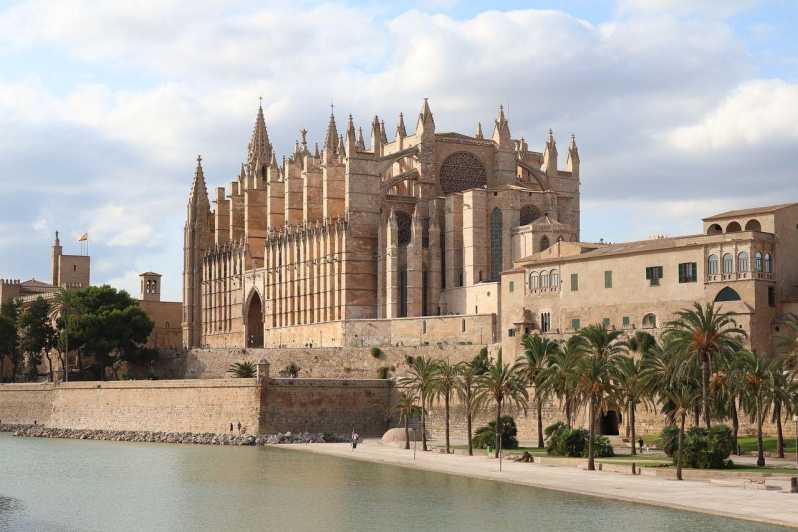
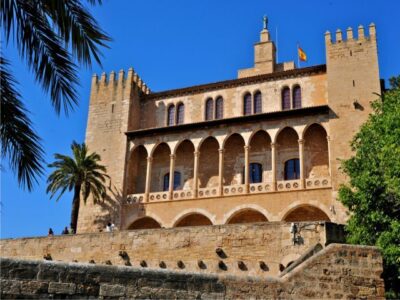
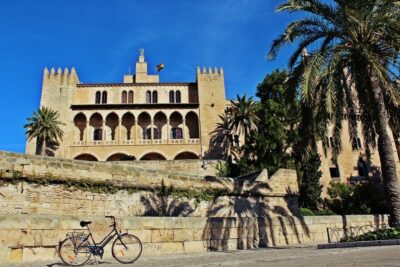
As you keep walking through Palma, you also get attention on the 13th-century Catalan Gothic Cathedral of Santa Maria of Palma, located atop the former citadel. The tour pairs that with the Royal Palace of La Almudaina, described as the former Alcázar of Palma, originally an Arabian fortress later claimed as the official royal residence, where the Spanish Royal family still spends summers.
Even if you do not enter everything, these are key visual anchors. They help you understand how power and faith both shaped the same city space. When you have this context, Palma feels less like separate attractions and more like one connected story.
Practical advice: when the views open up, take a few seconds to look back toward what you just visited. It is a simple trick, but it helps you map where your route sits relative to the big monuments.
Price and value: $280 per group, up to 15 people
The tour costs $280 per group for up to 15 people, and it runs about 1.5 hours. That is not a per-person rate, so the real value depends on how many people you bring.
Here is the quick math I use when deciding:
- If you fill the group to 15 people, it can work out to about $19 per person.
- If you go with a smaller party, your per-person cost rises, but you still get a private, English-speaking guide and the ability to customize on the spot.
What makes it feel worth it is the private format plus the focus on major landmarks. In other words, you pay for speed and clarity. A short guided walk can save you hours of guessing what to see first, especially in a city where different eras layer over each other.
One more value note: entrance fees are not included. That means your budget is partly determined by what you choose to enter versus just view from outside. If you want to minimize extra costs, prioritize the interpretation stops and treat entrances as optional.
Who this tour fits best in your Palma plans
This is a smart choice if you want:
- A structured intro to Palma’s Roman, Moorish, and Christian threads without spending the whole day.
- A private guide you can question as you walk.
- A compact route that gets you oriented for the rest of your trip.
It is also a good fit for mixed groups, like families with different interests, because you can usually steer the pace. Want architecture? Lean that way. Prefer history context? Keep asking. The tour description specifically notes possible customizing on the spot, which is great for real-life schedules.
If you are the type who loves long museum sessions and deep architectural study for hours, then you might find 1.5 hours short. But for most people, that short duration is the point, a focused primer that prevents your first day from feeling chaotic.
Guide quality matters, and the restaurant tip is a real bonus
One thing that stands out in the experience feedback is the guide impact. An English guide name that came up is Cristina, and she was praised for doing an excellent job, plus recommending and reserving a very good restaurant after the tour.
That is not a tiny perk. In Palma, where timing can be everything, having someone point you to a solid meal option right after your walk helps you keep momentum. You go from sightseeing mode to dinner mode without losing time hunting.
If you can, ask your guide at the end what they recommend for your group size and dietary needs. With a private guide, it is more likely you will get a thoughtful answer instead of a generic suggestion.
Should you book this Palma Private Guided Walking Tour?
Book it if you want a high-efficiency orientation to Palma that connects the city’s biggest storylines, Talayotic and Roman roots, Moorish heritage, and the Christian medieval era, all in about 90 minutes. It is especially worth it when you can spread the cost across a group of friends or family.
Skip it if you already know Palma well and you mainly want unhurried museum time or detailed interior visits. Also consider entrance fees, since they are not included, and your final spend may depend on how many sites you choose to enter.
If you are visiting for the first time and you want your day to feel organized, this is the kind of tour that gives you clarity fast, so you can enjoy Palma without constantly checking maps.
FAQ
How long is the Palma de Mallorca private guided walking tour?
The tour duration is 1.5 hours.
What is the meeting point for the tour?
You meet at the seating area of the Ayuntamiento, Plaça de Cort, 1, 07001 Palma, Balearic Islands, Spain.
Is the tour price per person?
No. The price is $280 per group, up to 15 people.
Are entrance fees included?
No. Entrance fees are not included.
What language is the live guide?
The live tour guide is available in English.
What is the cancellation policy?
There is free cancellation, and you can cancel up to 24 hours in advance for a full refund.
Recently reviewed around Mallorca
- Guided Kayak & Hike from Sant Elm to Sa Dragonera★ 5.0 · 28 reviews
- Western Water Park, Entrance tickets★ 4.0 · 30 reviews
- Sailing Flavors, Gastronomy and Relaxation at Sea★ 5.0 · 15 reviews
- 60 minutes Jetski Rental in Alcudia Bay★ 4.5 · 33 reviews
- Yoga and Brunch on the beach★ 5.0 · 9 reviews
- Wine tasting with wines from the smallest wineries in Mallorca★ 5.0 · 10 reviews
- Sa Clasta Wine Tours, Mallorca★ 4.5 · 20 reviews
- Western Water Park Day Trip from Mallorca★ 3.5 · 6 reviews
Palma Old Town Walking Tours, compared.
Palma de Mallorca Old Town Guided Bike Tour (Small Groups)
Read our review →
Palma, Cathedral & Valldemossa: Guided walking Tour
Read our review →Browse the lists this tour appears in