
Reviewed · MUSEUMS
Els Calderers House Museum in Mallorca
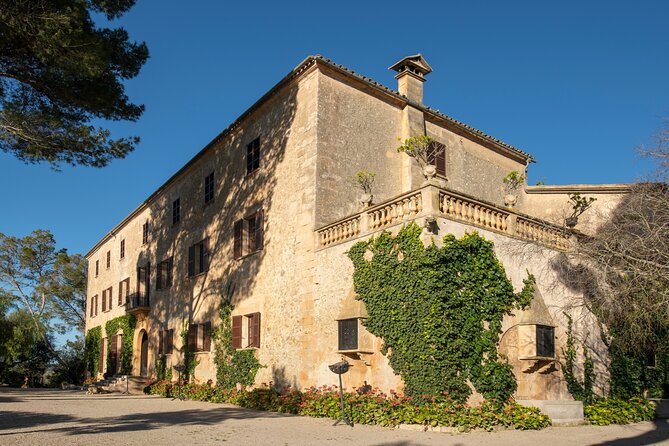
Els Calderers House Museum is interesting because it is not just a pretty mansion. It is a working-style country estate you walk through, room by room, where religion, bedrooms, kitchens, and farm trades all sit under the same roof and yard. I really like the way the tour follows daily life (not just big rooms), and I like how much you see for a low ticket price that includes admission. One drawback to consider: the experience ends with animal areas outside, and those parts can be a bit harder to enjoy if you expect modern, lush paddocks.
The 3-hour pace moves along steadily, and the interiors can feel cooler than the warm Mallorca air outside. With a max group size of 15 and guidance in English, you are not stuck behind a crowd of dozens trying to hear one sentence. Still, the house is big, and some explanations are more helpful than others depending on what you focus on.
If you want a genuine look at how rural families lived and worked on Mallorca, this is a strong pick. Bring curiosity, wear shoes that can handle uneven ground, and be ready for a guided walk that mixes domestic life with farm labor.
Key things to know before you go
- 30+ rooms in one flow: you see the ground-floor sacred and household spaces, then move into bedrooms and work areas.
- Farm trades included: carpentry, blacksmithing, milling, and bread-making spaces are part of the same visit.
- English-led experience: the tour is offered in English, which keeps the context clear as you move quickly.
- Small group size: up to 15 people makes it easier to ask questions and keep your place on the route.
- Free parking on site: handy if you are driving across San Juan area.
- Outside animal pens are part of the deal: go in prepared to look closely at shade, bedding, and comfort.
Price and time: getting your money’s worth
At about $10.81 per person for an experience that runs around 3 hours, Els Calderers is good value, especially because the admission ticket is included. The big reason it feels like a deal is simple: you are not paying extra for the privilege of seeing the house. You are buying a structured visit that funnels you through a lot of spaces, from small rooms to working areas.
You should also think about what “value” means here. This is not a quick photo stop, and it is not a museum with one room at a time and time to linger. It is a guided route built for movement. If you like to learn by walking and looking at everyday tools and household objects, you will feel like the price makes sense fast. If you hate being kept to a route, you might find the pacing a little brisk.
One more small practical upside: free parking is included. That matters on Mallorca, where parking can be a hassle once you are near busy attractions. The tour does not include private transportation, so you will plan your own ride, but once you are there, you can focus on the visit.
More museums and galleries in Mallorca:
- Manacor: Rafa Nadal Exhibition Entry Ticket
★ 4.6 · 836 reviews - Skip the Line: Rafa Nadal Museum Xperience
★ 4.0 · 196 reviews - Alcudia: Museum Sa Bassa Blanca Entry Ticket
★ 4.5 · 30 reviews
Getting to Els Calderers: the meeting point and parking win
The tour starts at Museu Etnològic dels Calderers, located at Finca Els Calderers, Camino, Els Calderers, 07240 San Juan, Illes Balears, Spain. It ends back at the same meeting point. That round-trip setup is great because you do not need to figure out how to get from the house to a separate museum location. You just follow the route, then you are back where you began.
Because free parking is included, driving is the easiest option for most people. If you are using public transport, you will want to plan around your local connections to San Juan and then still allow time to reach the finca road location. The tour itself does not provide private transportation, so count on your own plans for the trip in and out.
Two small notes that help with planning:
- The tour is offered in English, so you can follow the story without hunting for translations.
- The group is capped at 15 travelers, which usually makes for a calmer experience compared to bigger buses.
The big draw: 30+ rooms that explain rural life, not just decorate it
Els Calderers does something that many house museums forget. It shows you how people lived and worked, not only how they looked when visitors arrived. The route is built like a day in rural Mallorca, starting with household and sacred spaces, then moving into practical rooms, and finishing in the farm-related areas.
The interior also gives you a useful break from the heat. Even if Mallorca is warm outside, the house can feel noticeably cooler once you are inside. That matters because the tour still includes time outside at the end.
One practical consideration: the house has a lot of rooms, and the numbering and route can feel like information overload if you try to absorb everything at once. I recommend treating it like a guided storyline. Pick a theme as you go, for example how the home connected to farming work. That way, you are not just collecting facts, you are building a picture.
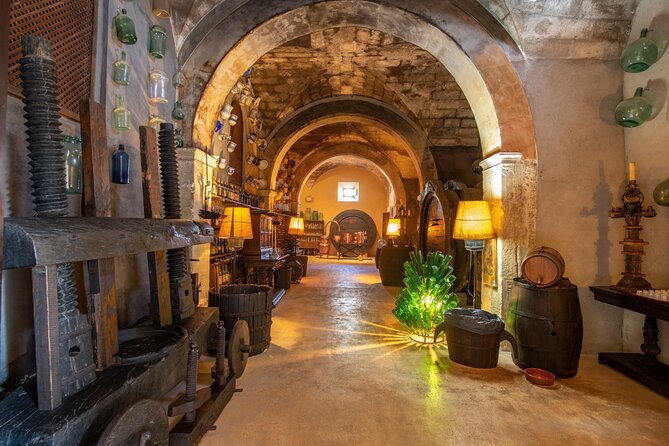
Ground-floor loop: hall, priest’s office, chapel, and the celler
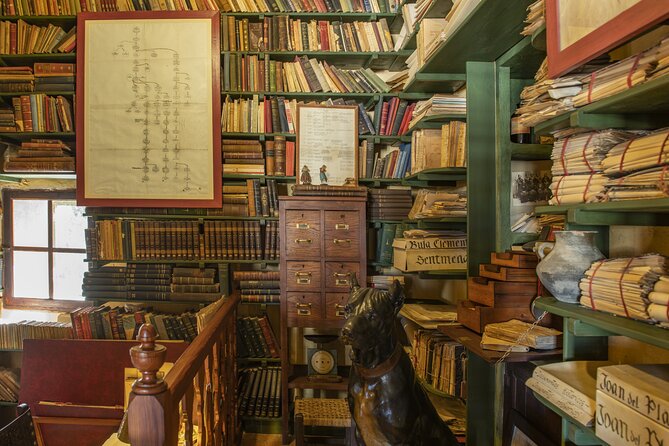
You begin with the ground-floor rooms. The first spaces include Hall, then another Hall, followed by the Office of the Priest, the Chapel, and the Celler. That sequence is a clue to how the estate was organized. You are not starting in a bedroom or a kitchen. You are starting in the spaces that structured community life and daily routine.
Here is what I think you will enjoy most in this part:
- The chapel and priest-related office help you understand that religion was not a distant concept. It was part of estate life.
- The celler (often a wine or storage-style room in country houses) gives you a sense of how the household kept provisions.
If you are the type who likes to read rooms like a map, this ground-floor stretch helps you. You get the layout and the priorities. The halls act like hubs, while the chapel and priest spaces explain the estate’s social order.
The main drawback in this early phase is that the tour moves on quickly. You will see plenty, but you will not have long, slow pauses to study every detail unless you are comfortable walking a bit fast and then catching your favorite spots later.
Same island, a completely different kind of day:
- Palma: Cathedral of Mallorca Skip-the-Line Entry Ticket
★ 4.6 · 14,386 reviews - Palma de Mallorca: 5-Hour Catamaran Cruise with Lunch & Swim
★ 4.5 · 9,957 reviews - Porto Cristo: Caves of Hams Entry Ticket
★ 4.2 · 6,548 reviews - Palma de Mallorca: City Sightseeing Hop-On Hop-Off Bus Tour
★ 4.1 · 4,450 reviews
Bedrooms and practical rooms: where comfort meets routine
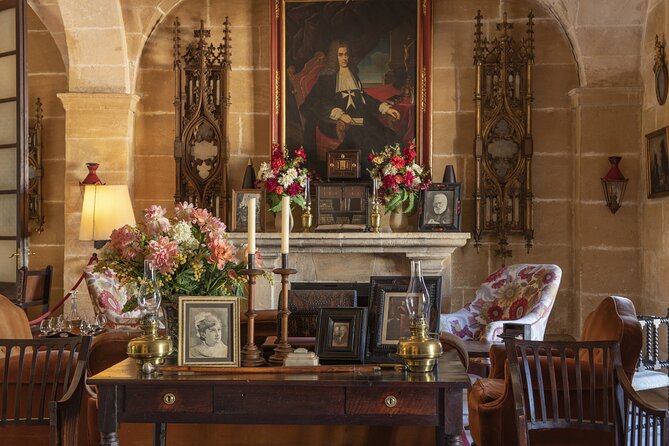
After the initial ground-floor spaces, the route moves into the main bedroom and related rooms: the common room, the dressing room for the man (listed in the route), the corridor, then the toilet and ironer. This part can be surprisingly satisfying because it feels real. You are not just looking at furniture. You are seeing daily habits built into the layout.
A few things to watch for:
- The common room helps you imagine shared time inside, not just private sleep spaces.
- The dressing room and the way it connects to the rest of the suite gives you a better sense of how people prepared for the day.
- The ironer is the kind of small work-related detail that many visitors miss if they only focus on big artwork. Here, that practical room is part of the story.
One reason I like this segment: it helps you understand “home” as a set of chores and routines, not just rooms for rest. Even if you do not love textiles or household tools, it gives context for how someone living on a Mallorca estate likely spent their day.
Barn to kitchen: peasant spaces, bread ovens, and laundry work
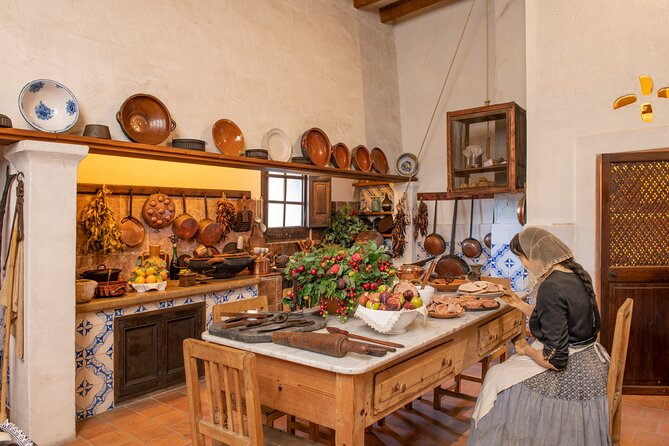
Next the route heads through work-linked rooms and domestic support spaces. You go past the Barn, then Bedrooms again, followed by the Office of the Mayoral, the Peasant Kitchen, Toilets, the Bar, Souvenirs, the Bread Oven, and the Laundry.
This is the part of the tour that feels the most tied to labor. It is also usually the part where you start appreciating the estate’s scale. A household like this was not just a family home. It was a managed operation.
Why this section is valuable for you:
- The peasant kitchen helps you compare how different groups likely ate and lived inside the same estate world.
- The office of the mayoral (estate manager) signals that someone coordinated people and tasks.
- The bread oven ties the household to everyday essentials. Food was work, and bread was central.
- Laundry shows the behind-the-scenes labor that kept the home functioning.
Two practical tips here. First, if you like photos, this is where you want to be ready, because you have multiple rooms with objects and textures that photograph well. Second, if you get slightly museum fatigue, focus on one or two “work rooms” and let the rest wash over you.
The final stops: trades, milling, and the farmyards with animals
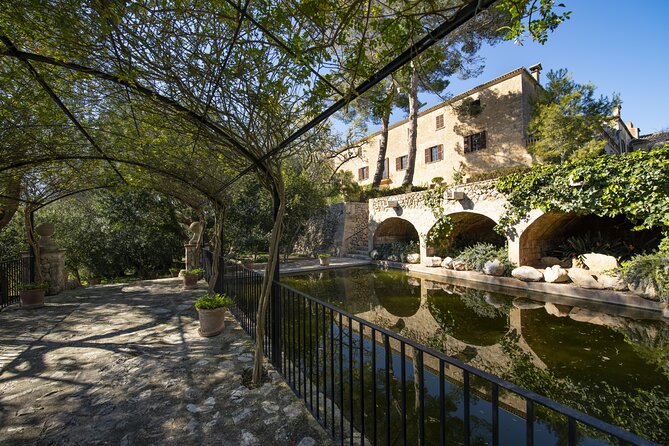
The tour finishes in the estate’s working areas. You move through Carpentry and Blacksmithing, then machinery related to Algarrobos and Almonds, then a Pig slaughter room, Corrals with different animals, the Flour Mill, Corral of equine animals, and finally the Porch of carts and garnishes.
This is where Els Calderers earns its reputation as more than a static museum. You are seeing the tools and spaces that connected the house to production. Carpentry and blacksmithing suggest maintenance and repair. Milling and flour-making relate to what fed the household and workers. Almond and carob-related machinery connects crops to processing.
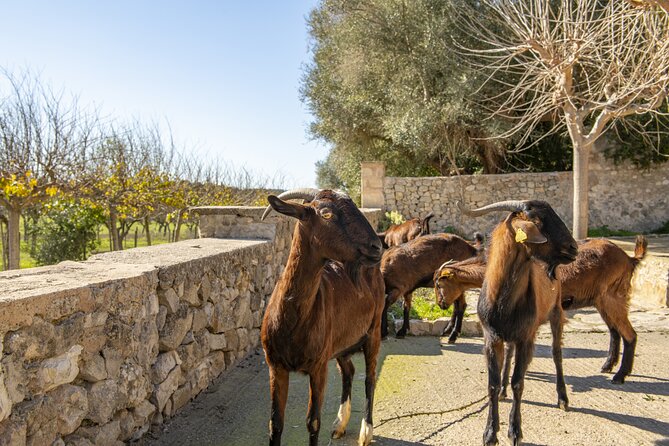
And then come the animal corrals outside. You may find this the most emotionally complicated part of the visit. Some descriptions of the exterior setup focus on how bare certain pens can look in the Mediterranean heat, even when animals are in good condition. Others emphasize that animals may be turned out overnight into paddocks, and that shade and water matter more than lush grass.
My practical advice: do not judge this setting from northern European expectations. Mediterranean animal husbandry can look different. But also do not switch your brain off. If you are sensitive to animal comfort, take a slow look at bedding, shade, and space during your visit. If something feels off to you, it is okay to spend less time on those areas and continue with the rest of the tour.
Pacing, groups, and what English adds to your experience
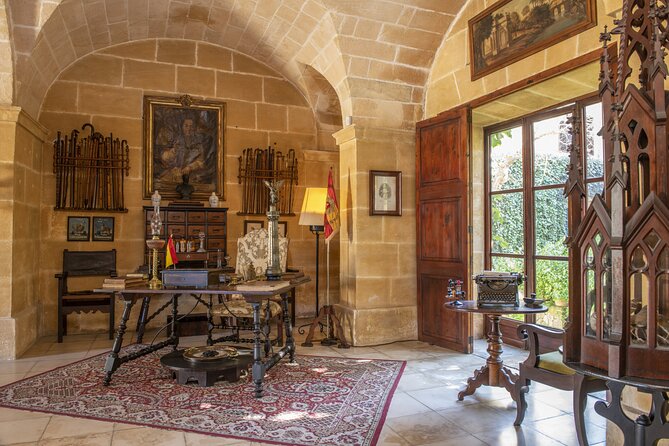
The experience lasts around 3 hours and serves a maximum of 15 travelers. That size is a big deal. It helps the guide keep people together without rushing you as aggressively. It also usually means you can hear explanations better, which matters because this tour is about interpretation. You are walking a route where context turns objects into meaning.
Because the tour is offered in English, you will not have to piece together the story through signage alone. You can focus on the rooms and ask questions if you want. I also like that the route is structured. Even if you are not a museum person, you will still leave with a sense of the estate’s logic.
One more note that affects the feel: the house has many rooms, and the printed guidance can sometimes be confusing if you try to match every number to your surroundings. If you notice that happening, do not fight it. Use the guide’s verbal flow as your anchor.
Outside grounds, atmosphere, and small practical expectations
Els Calderers is not only indoor. The estate grounds include garden and orchards and the animal areas that bring the place to life. Many people also comment on the peaceful feel of the exterior compared to busier spots on Mallorca. That quiet matters. It gives you time to take in views from the property and to slow down after the faster indoor sections.
There is also a bar and a souvenirs area on the route. If you plan to buy a drink or snack, be aware that payment options can be inconsistent. Some visitors have mentioned difficulty paying by card at the bar. If you want to be safe, bring some cash just in case.
This museum is not a glossy new-build experience. It is an estate kept alive as a museum, and the condition can read as a bit uneven depending on the room. If you expect a perfectly polished, dust-free display in every corner, set expectations carefully. If you like old places that feel lived-in and slightly imperfect, you may connect with it more.
Who should book Els Calderers, and who might not love it
You should book if you:
- Love country-house layouts and want to understand how estates worked.
- Want a 3-hour guided structure that moves through many rooms without you getting lost.
- Enjoy practical rooms like kitchens, bread ovens, laundry, milling spaces, and craft trades.
You might skip or approach with caution if you:
- Are uncomfortable with animal-adjacent parts of farm museums.
- Expect a spotless, high-end museum presentation in every room and outside pen.
This is also a strong choice if you are traveling with someone who likes photos and someone who likes learning. The tour gives both. The route is packed enough to keep the non-museum person engaged, and the objects and room functions give the curious one plenty to think about.
Should you book Els Calderers House Museum?
Yes, you should book if your idea of a great Mallorca visit is rural life, house details, and farm work spaces all in one coherent walk. At about $10.81 with the admission ticket included and free parking, it is a smart value play for a half-day-ish commitment. Just go in with eyes open about the outside animal areas and the fact that this is an old estate, not a brand new museum display.
FAQ
How long is the Els Calderers House Museum tour?
It lasts about 3 hours.
Is the admission ticket included in the price?
Yes. The tour includes an admission ticket.
Is the tour offered in English?
Yes. The experience is offered in English.
Where does the tour start and end?
It starts at Museu Etnològic dels Calderers, Finca Els Calderers Camino, Els Calderers, 07240 San Juan, Illes Balears, Spain, and it ends back at the same meeting point.
Does the tour include parking?
Yes. Free parking is included.
Is private transportation included?
No. Private transportation is not included.
Can I get a full refund if I cancel?
Yes. You can cancel up to 24 hours in advance for a full refund.
Recently reviewed around Mallorca
- Guided Kayak & Hike from Sant Elm to Sa Dragonera★ 5.0 · 28 reviews
- Western Water Park, Entrance tickets★ 4.0 · 30 reviews
- Sailing Flavors, Gastronomy and Relaxation at Sea★ 5.0 · 15 reviews
- 60 minutes Jetski Rental in Alcudia Bay★ 4.5 · 33 reviews
- Yoga and Brunch on the beach★ 5.0 · 9 reviews
- Wine tasting with wines from the smallest wineries in Mallorca★ 5.0 · 10 reviews
- Sa Clasta Wine Tours, Mallorca★ 4.5 · 20 reviews
- Western Water Park Day Trip from Mallorca★ 3.5 · 6 reviews
Museums, compared.


MUCBO | Jardí Botànic de Sóller – Balearic Museum of Natural Sciences
Read our review →
Rafa Nadal Xperience Museum with Private Transport from Mallorca
Read our review →Browse the lists this tour appears in