
Reviewed · MALLORCA
Secrets of Jewish Majorca – Half Day Experience
Secrets of Jewish Majorca is interesting because it shows you how Jewish life in Palma survived, adapted, and sometimes went underground, even after centuries of forced conversion and persecution. You start in a purpose-built Jewish Quarter area, then you move out into the streets where the story is still written into the city’s layout. The past here is not just behind glass.
I especially love the secret tunnel moment inside a ceramics workshop, which turns a history lesson into something you can physically feel. I also like the way the tour ties major events like the Inquisition and the rise of crypto-Jews to everyday details, like the streets where Xueta families lived and the kinds of family-run shops that still carry those lineages.
One thing to consider is the pace. You only have about 30 minutes at each of the museum and the bakery, so this is not a slow, lingering day. If you want deep reading time, bring a note-taking mindset and save your longer questions for afterward.
Key highlights you will actually remember
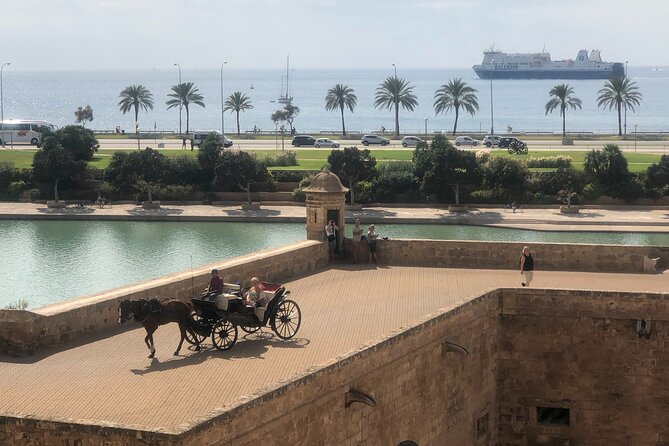
- Ceramics workshop tunnel that adds a real sense of place to the history
- Inquisition, forced conversions, and crypto-Jews explained in human terms, not just dates
- Xueta street-level heritage, including references to family businesses and long-held jewelry shops
- Memorials tied to later conflict, with plaques or Stopelsteins related to the Spanish Civil War
- Food history with meaning, including the ensaimada story linked to centuries of discrimination
- Private group format, so the pace and focus are more likely to match your group
A Jewish Palma route built around streets, not just facts
If you have ever walked through Palma and felt like you were missing a layer of the city, this half-day tour is designed to fix that. You are not only hearing about Jewish history. You are seeing how the city itself shaped what could be practiced openly and what had to be hidden.
This tour is also a nice size for visitors who want meaningful context without turning their whole day into a lecture. Expect about four hours total, mostly on foot, with a structure that starts with orientation and ends with a couple of very specific “place-based” stops.
And because it is described as a private experience for your group, you will usually get a smoother flow than you would on a large bus-style tour. You also get practical support like a mobile ticket and included fees and taxes.
Other Mallorca days worth a look:
- Palma: Cathedral of Mallorca Skip-the-Line Entry Ticket
★ 4.6 · 14,386 reviews - Palma de Mallorca: 5-Hour Catamaran Cruise with Lunch & Swim
★ 4.5 · 9,957 reviews - Porto Cristo: Caves of Hams Entry Ticket
★ 4.2 · 6,548 reviews
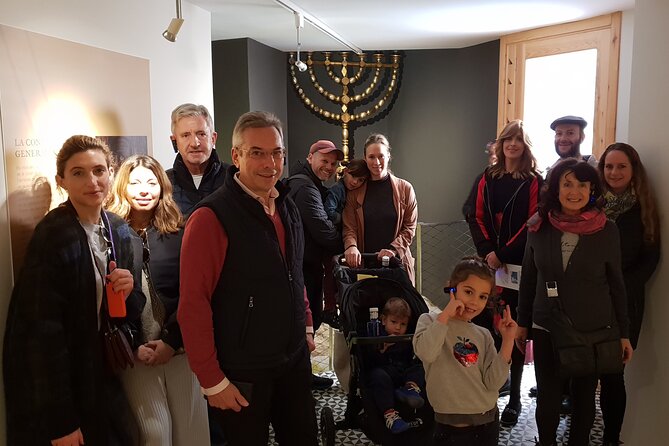
Starting at the Jewish Quarter Interpretation Center in Palma
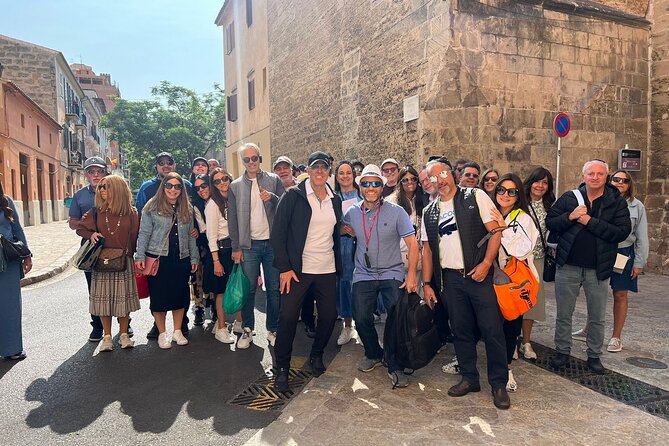
You begin at a clear meeting spot in the city center: Starbucks, Plaça de Cort, 1 (Distrito Centro), Palma. It is easy to find, and that matters because your first stop sets the tone for everything after.
From there, you go to the Jewish Quarter Interpretation Center, positioned next to the entry point to the old Jewish Quarter. That location is smart. It gives you a fast orientation so the streets you later walk through make more sense right away. You’ll hear how Jewish Quarters across Catalan-speaking regions sometimes use signs like Carrer de Call, Street of the Jewish Quarter. It is a subtle detail, but it helps you recognize the pattern across the broader region.
Then comes one of the most memorable parts: you enter a secret tunnel in a ceramics workshop. Even if you do not usually get excited about workshops, this is the kind of moment that turns history from abstract to physical. It is a short scene, but it makes you more alert to what you are seeing around you.
The ceremonies of survival: Inquisition, forced conversions, and crypto-Jews
The story at this beginning stage is the backbone of the tour. You learn about the Inquisition, forced conversions, and how Jewish identity survived through people who had to navigate public Catholic life while holding onto Jewish belief in private, often described as crypto-Jews.
What I like about this approach is that it does not treat survival as a neat, linear timeline. Instead, it frames it as a lived experience. You hear about what it meant to keep faith under pressure, and how that pressure shaped the kinds of choices families had to make.
This is where you should lean in a bit. If you are the type who likes history in your head to match the world you see in front of you, this part will land. If you prefer history as pure facts, you might want to take notes and come back to the emotional side later, because the tour’s narrative is built to make you feel the stakes.
Also, the center is where you get the terminology and the context you need before the streets and neighborhoods come into focus later.
Stopelsteins and plaques: why later history matters too
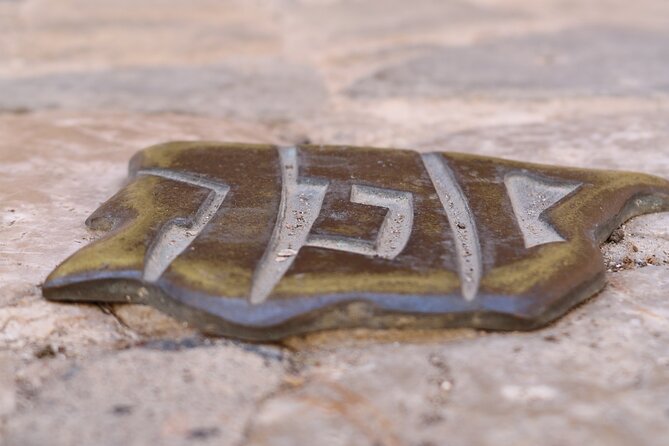
After the tunnel and the workshop connection, you move to memorial plaques or Stopelsteins related to the Spanish Civil War. That detail is important, and not just because it is something you might not expect on a Jewish heritage tour.
It reminds you that Jewish history in Palma does not sit in a vacuum. The city’s story includes multiple layers of conflict and displacement. Seeing memorial markers in the middle of a walk makes the past feel closer, and it also encourages you to notice how memory is built into everyday spaces.
If you are traveling with kids, this can actually be a good teachable moment. It can help them understand that history is not only what happened long ago, it is also what people choose to remember now.
Same island, a completely different kind of day:
- Palma de Mallorca: City Sightseeing Hop-On Hop-Off Bus Tour
★ 4.1 · 4,450 reviews - Mallorca: Island Tour with Boat, Tram & Train from the South
★ 4.4 · 3,888 reviews - Port d’Alcudia: North Coast Catamaran Cruise with Meal
★ 4.5 · 2,978 reviews - Palma de Mallorca: Sunset Boat Tour
★ 4.6 · 2,894 reviews
Xueta streets and family businesses that still carry names
The tour then shifts into the streets where Xueta families lived for centuries, until as recently as the 1960s. That is a striking timeline point. It keeps the story from turning into something that feels safely far away.
You will walk through the areas connected to this community and learn how signs of marginalization can still show up today. The tour highlights that many current jewelry shops have been kept within families for generations. In other words, you are not just learning about what happened. You’re seeing how communities left durable traces.
I find this section especially valuable because it pushes you to look beyond the obvious landmarks. Palma is gorgeous, but beauty can distract you. Here, the tour trains your eyes to recognize social history in commerce, in family continuity, and in the persistence of place names and patterns.
One practical tip: bring comfortable shoes. Street-level history works best when you can stay focused without needing to constantly reset your legs. The story moves at walking speed.
Centre Maimó Ben Faraig Museum: a short stop with a purpose
Next up is a visit to the Centre Maimó Ben Faraig Museum. You spend about 30 minutes here, and admission is listed as free.
Because the time is short, treat this like a focused checkpoint, not a long self-guided museum afternoon. Your goal is to use it to reinforce what you heard at the start: how community memory is preserved, and how culture can persist even when public life forces people into complicated roles.
If you are the kind of visitor who loves museums, you might wish you had more time. That is normal. The upside is that this tour keeps the day moving, and you still get a strong city-walk component instead of turning everything into gallery time.
Panaderia Fiol bakery stop, and the ensaimada story with pork fat
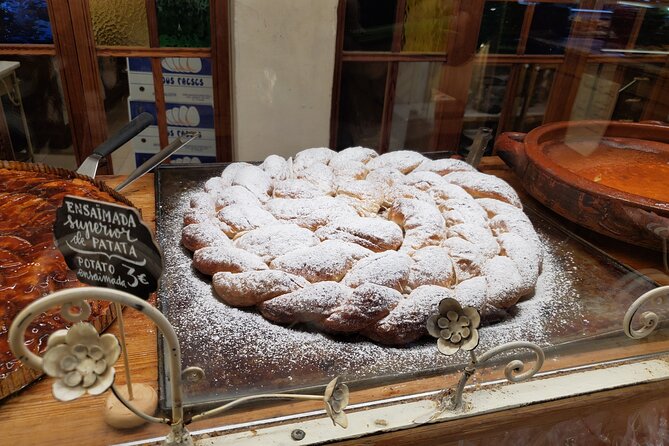
The last stop is Panaderia Fiol, a modern bakery with a medieval oven built in 1652. Again, time is about 30 minutes, and admission is listed as free.
This is where the tour uses food history in a clever way. You learn that the famous Mallorquin pastry, ensaimada, is specifically cooked with pork fat as a reaction to centuries-old prejudice and discrimination. That may sound like a trivia fact until you connect it to the broader story the guide has been building all morning.
If you have dietary restrictions, this is the kind of moment you should pause and think. The tour’s job is historical, not medical, so you should plan accordingly.
Also, since this is a bakery stop, you may be tempted to buy something. The tour does not list breakfast, lunch, or snacks as included, so plan to treat any purchase here as optional. Still, the setting matters, because you are not just eating a pastry. You are tasting a cultural detail that the tour frames as a response to survival under pressure.
Pacing, walking, and weather: how to make this tour feel easy
This experience is about four hours, so it fits well when you want a strong cultural hit but you still want time afterward for a meal and wandering. You also do not need to plan complicated transportation for the actual stops, since the day loops back to the meeting point.
However, there is one big condition: it requires good weather. If weather turns, you will be offered a different date or a full refund. That matters in Mallorca, where plans can change quickly in shoulder seasons.
My advice is simple: dress for walking, and keep a light layer for shade and temperature swings. Even with a half-day tour, you will be moving through outdoor streets.
Price and value: what you are paying for at $259.29 per person
At $259.29 per person for a roughly four-hour experience, this is not a budget tour. So the value has to come from what is unique, and this one has real differentiators.
You are paying for:
- A structured route that connects major historical themes to specific places in Palma
- The signature ceramics workshop secret tunnel moment
- Multiple place-based stops, including the Centre Maimó Ben Faraig Museum and Panaderia Fiol
- A guided narrative that focuses on forced conversion and the crypto-Jews story, not only general Jewish landmarks
It also helps that fees and taxes are included. That reduces the annoying “add-on” feeling that some tours create when they start charging for every small component.
If you are traveling with friends, the tour also notes group discounts, which can make the cost feel more reasonable. For solo travelers or couples, it may still feel steep compared with standard city walks, but if you care about historical context and want it delivered in a compact format, it can be worth it.
Practical expectations: what you should plan for on the day
This tour is built around storytelling and specific locations. You should expect a mix of:
- Orientation at the Jewish Quarter Interpretation Center
- Walking through the Xueta-related streets and neighborhood context
- A brief museum stop
- A bakery stop with a historic oven connection
You also should not count on long shopping detours. The focus is heritage sites and connected cultural references. If you want to browse jewelry shops deeply, plan that for your free time before or after the tour.
One more caution: the experience ends back at the meeting point. That’s convenient, but it means your day planning needs to allow you to return there easily.
And yes, you will likely see the city differently after. Even on your own afterward, you may find yourself noticing street patterns and signage like Carrer de Call, because your eyes have been trained for the theme.
Who should book this and who should skip it
You should book this tour if:
- You want a street-level history experience in Palma
- You care about the complicated parts of Jewish survival history in Spain, including forced conversion and crypto-Jews
- You enjoy food stories that connect culture, identity, and discrimination, like the ensaimada pork fat detail
- You like guided context that helps you interpret what you are seeing, not just list landmarks
You might skip it if:
- You prefer purely visual museums with lots of time inside (this is short museum time)
- You want a lot of free time for cafes or shopping during the tour itself
- Weather dependence is an issue for your schedule, since the experience needs good conditions
Should you book Secrets of Jewish Majorca?
If you are in Palma for a short stay and you want one half-day that gives you real context for the city, I think this is a strong choice. The mix of orientation, a memorable tunnel moment, and the street-level Xueta story makes it more than a generic heritage walk. Add in the museum and bakery stops, and you get a good balance of place, narrative, and culture.
At $259.29 per person, it is a commitment. But the price makes more sense when you see that you are not just paying for access, you are paying for the guide’s ability to connect the big historical forces to the small details you otherwise would miss.
My call: book it if you want meaning in your walking. Skip it if you want a relaxing, unstructured afternoon.
FAQ
How long is the Secrets of Jewish Majorca half-day experience?
It lasts about 4 hours.
Where does the tour start?
The meeting point is Starbucks, Plaça de Cort, 1, Palma, in the city center.
Is the experience private?
Yes. It is listed as private, meaning only your group participates.
What stops are included during the tour?
You visit the Jewish Quarter Interpretation Center, the Centre Maimó Ben Faraig Museum, and Panaderia Fiol.
Is the admission included for the stops?
The stops are listed with admission ticket free, and the tour includes all fees and taxes.
What meals or drinks are included?
Coffee and/or tea, breakfast, lunch, and snacks are not included.
What if the weather is bad?
The experience requires good weather. If it is canceled due to poor weather, you will be offered a different date or a full refund.
Can I get a refund if I cancel?
Yes, you can cancel for a full refund up to 24 hours in advance.
Recently reviewed around Mallorca
- Guided Kayak & Hike from Sant Elm to Sa Dragonera★ 5.0 · 28 reviews
- Western Water Park, Entrance tickets★ 4.0 · 30 reviews
- Sailing Flavors, Gastronomy and Relaxation at Sea★ 5.0 · 15 reviews
- 60 minutes Jetski Rental in Alcudia Bay★ 4.5 · 33 reviews
- Yoga and Brunch on the beach★ 5.0 · 9 reviews
- Wine tasting with wines from the smallest wineries in Mallorca★ 5.0 · 10 reviews
- Western Water Park Day Trip from Mallorca★ 3.5 · 6 reviews
- Sa Clasta Wine Tours, Mallorca★ 4.5 · 20 reviews