
Reviewed · WALKING TOURS
Palma’s Alternative History: A Self-Guided Audio Walk
Palma’s Alternative History is interesting because it turns a fast walk through Palma’s center into a story you can control. I like the self-paced audio format, especially the way you can start, pause, and resume on your own schedule. I also like the local perspective from Sandra, a longtime resident, because the stops feel tied to real streets and daily life. The one possible drawback is that the experience depends on the VoiceMap app, and if your phone has app or battery issues, you may have a tougher time staying on track.
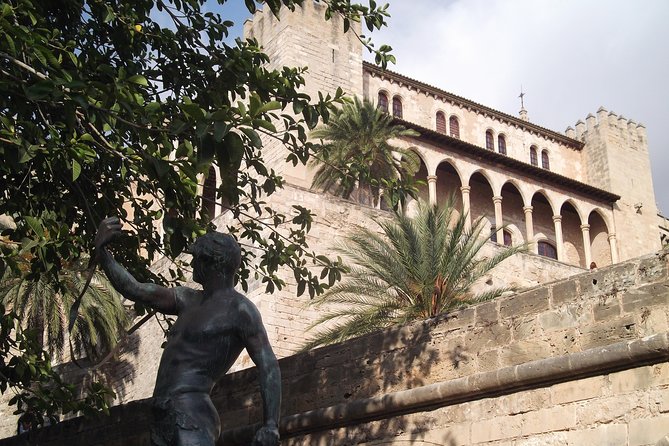
You’ll start at Parc de la Mar, then work your way toward Plaça de Cort. Expect big monuments like La Seu and the Almudaina Palace, plus smaller, more human moments like an old house now used as a lounge bar and a church you can step into for free.
Key Things to Know Before You Go
- Flexible pacing: begin, pause, and continue whenever you want
- Local storyteller: audio guided by Sandra, a longtime resident
- Works offline: audio, maps, and geodata are available offline
- Route covers the essentials: La Seu, Almudaina, and Plaça de Cort included
- Smart break potential: one stop is a 17th-century house that’s now a lounge bar
- Your phone matters: bring headphones and expect the app to be a key part of navigation
Getting Your Bearings at Parc de la Mar (and Why That Start Works)
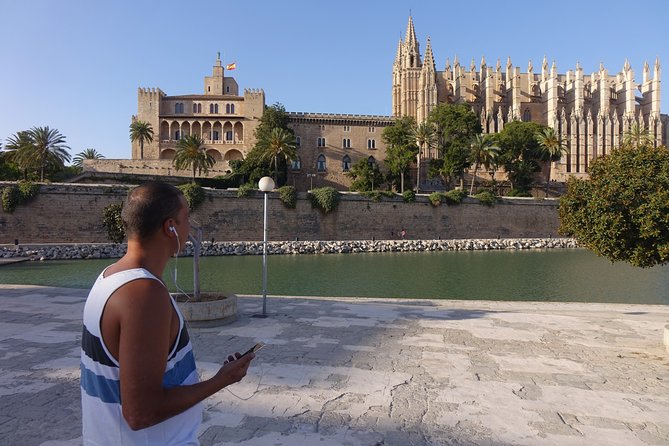
If you want a first visit to Palma that does not feel rushed, this is a strong way to do it. The route begins at Parc de la Mar, a pleasant square with a small salty lake that sits right in the view corridor of two heavy hitters: the Cathedral (La Seu) and the Almudaina Palace. That matters, because you get orientation fast. Within minutes, you understand how Palma’s historic core is layered, with power, worship, and later tourism all visible in the same direction.
This start also gives you a neat lesson in how the city changed. Parc de la Mar was built over the sea in the 1960s, right when Majorca hit a tourism boom. So, even before the first audio story really kicks in, you’re seeing a modern solution to an older coastline, and you can literally connect the past to the present with your eyes.
Practical tip: when you begin, take a slow look at where you stand. You don’t need to memorize anything, but you will enjoy the route more if you can later glance back at La Seu and recognize where the stories are pulling you.
More walking tours in Mallorca:
- Palma de Mallorca: City Walking Tour with The Cathedral
★ 4.0 · 657 reviews - Palma de Mallorca: Foodie Walking Tour of the Old Town
★ 4.6 · 372 reviews - Private walking tour in Palma de Mallorca with local guides.
★ 5.0 · 182 reviews
The Art Nouveau Stop: When Palma Learns New Styles
From Parc de la Mar, the audio walk moves you to an Art Nouveau monument originally built in the early 1900s. This is one of those Palma stops that can be easy to walk past if you are only hunting for the medieval stuff. The audio helps you notice the style instead of just passing it.
Why I like this part: the tour does not treat Palma as one single era. You get the older spine of the city, then you see the newer layer, when Palma’s identity expanded beyond medieval streets. It makes the whole walk feel more complete, like you are not reading only one chapter of a book.
If you are a photo person, stand still for a minute around this stop. Art Nouveau details reward a little patience, and the tour pace gives you that chance without you having to plan your own detours.
Can Marcel, Now a Lounge Bar: A Rest Stop With Real Texture
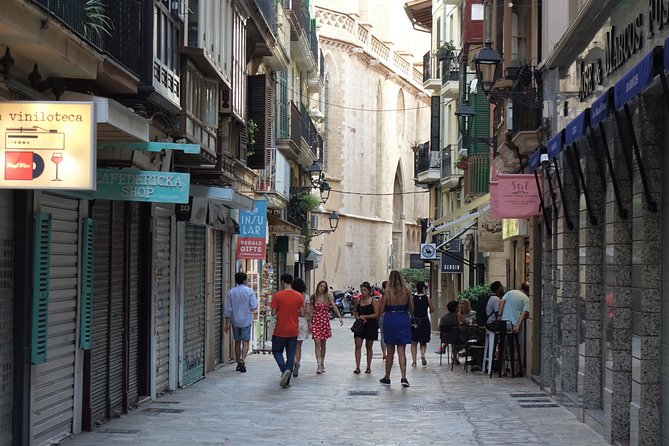
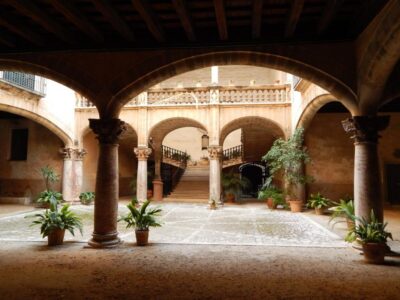
Next you’ll hit a traditional noble Majorcan home, originally called Can Marcel, built in the seventeenth century. Today, it hosts a lounge bar with a rustic, authentic design, and it is a perfect “small break” point during the walk.
Even if you do not stop for a drink, you’ll appreciate what this moment does for your tour. Your brain gets tired scanning big monuments. A doorway, a courtyard feel, and the scale of a house remind you that people lived here long before there were ticket lines and tour buses.
If you do want a pause here, do it your way. The tour is built for you to start and stop the audio when it suits you, so you can linger without the pressure of catching up to a group schedule. Just remember: food and drink are not included, and the tour does not provide headphones or a phone, so plan accordingly.
Santa Eulalia Church: Step Into the 13th Century (For Free)
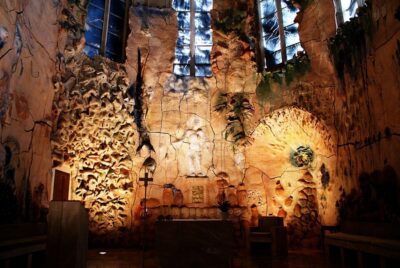
One of the best practical points on the route is that you can visit Santa Eulalia Church, built in the thirteenth century. The audio connects it to major turning points in Majorcan royal history, including the fact that early kings of Majorca were crowned here before La Seu was completed in 1601.
You’ll also get a quick sense of what to look for inside. The church has a baroque interior style, so it is not a plain, bare church experience. And the important detail for planning: admission to Santa Eulalia is free.
Why this stop works on a self-guided audio walk: you can listen to the story, step inside when you are ready, and then slow down at your own pace to match the audio moments with what you see. You are not trying to take in centuries while also keeping up with someone moving ahead.
More history tours in Mallorca:
- 3 Hours Historic E-Bike Tour in Palma de Mallorca
★ 4.4 · 32 reviews - Palma de Mallorca: Wooden Sailboat; Food, Views & History
★ 4.8 · 19 reviews - Palma de Mallorca Historical Walking Tour
★ 5.0 · 3 reviews
Sa Riera Torrent and the Street That Divided the City
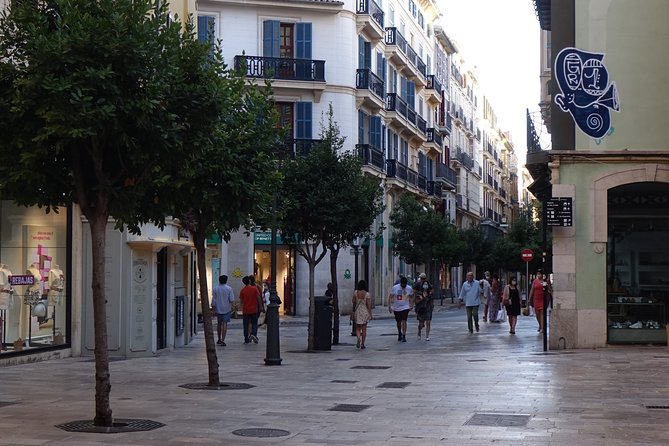
Then the tour shifts from “big building” to “how the city flowed.” You’ll hear about Sa Riera, a torrent that in the past ran through the area and divided Palma into two parts. The audio also mentions that knights’ tournaments were organized along this torrent.
This is the kind of historical detail that changes how you understand streets. Even if you never picture a torrent running through the middle of the city today, you start to see why a street layout matters. The audio takes something you might assume is just a normal passageway and turns it into an organizing feature of Palma.
If you are walking quickly, do not. This is a good moment to slow down, stand in place, and let the story connect with the street view around you.
Plaça de Cort: Mile Zero and the “Finish Line” Feeling
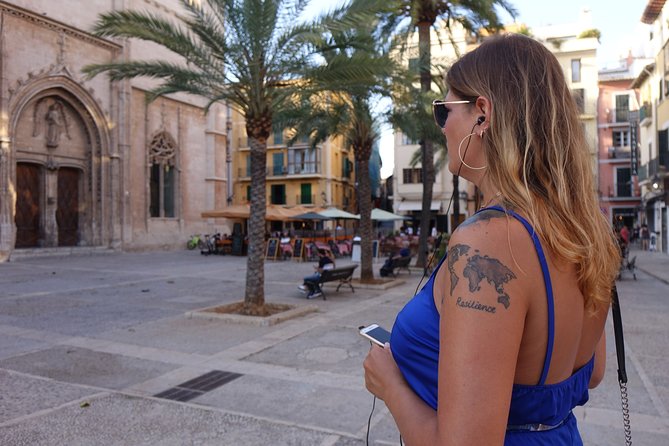
The walk’s finish is built around a satisfying endpoint: Plaça de Cort, described as Palma’s mile zero. The audio tour ends here, roughly an hour after it starts, near the town hall area.
This is more than a logistical endpoint. A “mile zero” spot is often where a city puts its meaning. Ending here gives the whole experience a sense of closure, like you’ve reached the symbolic center rather than just stopping wherever your app says to stop.
If you time it right, you can also use this ending to continue exploring under your own steam. You already have context now, so your wandering becomes smarter.
The 19th-Century Square and Saint Sebastian, January 19
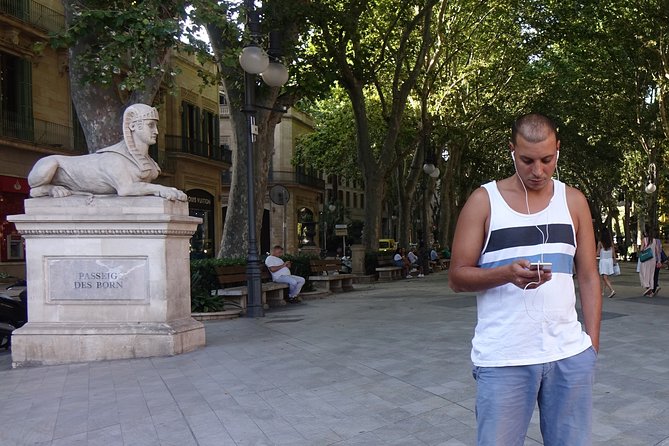
Another central square you’ll reach is Plaça de Sant Sebastià, built in the middle of the nineteenth century. The audio ties it to an annual tradition: the feast day of Saint Sebastian on January 19, celebrated as the patron saint festivities for Palma.
Even if you are not in Palma during January, this is useful. It gives you a calendar link, a reason certain places in a city matter beyond their architecture. It also helps you understand why locals may treat some squares as landmarks of identity, not just meeting points.
La Seu, Cathedral of Light: Start Dates, End Dates, and What to Notice
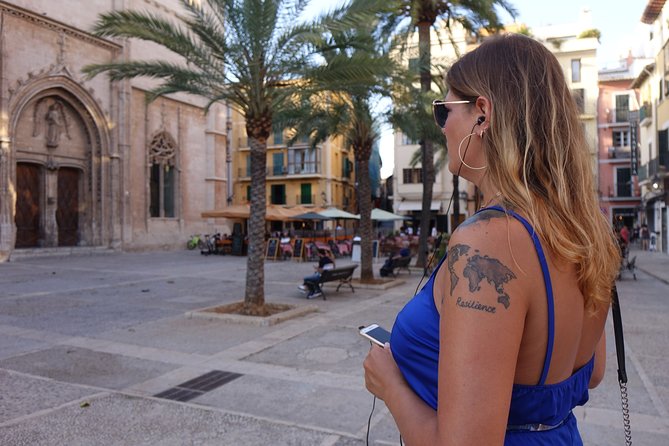
No Palma audio walk feels complete without the Cathedral of Palma, also called La Seu or the Cathedral of Light. The construction began in 1230 and finished 371 years later, in 1601. That huge time span is one of the tour’s quiet strengths, because it reminds you that cathedrals are never finished by one generation.
During the audio portion here, the emphasis is on what locals feel about the building today: it remains a major source of pride for Majorcans.
What you can do with this stop, beyond looking: treat it like a “visual checklist.” As you stand in front of La Seu, pay attention to what your eyes catch first, then listen to the audio points and compare. This stops the experience from becoming passive listening and makes it more active.
Almudaina Palace: The Oldest Monument and a Real Official Residence
Next is the Almudaina Palace, described as an Arabic king palace built in the tenth century. It’s noted as the oldest monument in Palma, and today it is an official king residence, where King Philip VI receives official visitors such as presidents from other countries. The audio also notes that it functions as a museum and a military building.
This is a big jump in what you normally expect to learn on a walking tour. Most audio tours give you culture and then end. Here, you get continuity of power and function. The site is old, but it is not dead. It is still used.
Planning note: your tour does not include museum or other entrance fees. The audio walk is meant to help you understand what you are looking at and when you should expect certain changes in function. If you want to go inside specific areas, you would need to handle any admissions on your own.
Gothic Maritime Stock Exchange: A Free Admission Moment
The walk also includes a Gothic style building built in 1428, once the former maritime stock exchange. You’ll hear that it is one of Palma’s notable architectural jewels and that admission is free.
This is one of the route’s best “value-add” elements. Free entry points are rare in cities where historic centers can feel like one payment gate after another. With this stop, you get the bonus feeling of stepping into something important without the usual ticket friction.
If you are traveling with limited time, this kind of stop is gold. It turns your self-guided audio walk into more than listening. You get a chance to see an interior, even if the rest of the route is mainly exterior viewing.
How the VoiceMap Audio Format Fits Real Travel Days
Let’s talk about the actual experience mechanics, because this is a self-guided audio walk, not a live guide walking beside you.
You use the VoiceMap app on Android or iOS. The good news is that you get offline access to audio, maps, and geodata. So you can save mobile data and keep the experience working in areas with weak signal.
The tour is also designed for flexibility. The audio can be started and paused whenever you choose. That is helpful when you hit:
- a sudden photo opportunity
- a church that is open and you decide to go inside
- a pause for a drink at Can Marcel
Now the caution. The app is central to how you follow the route. One unhappy experience report complained the app locked up and needed restarting and manual point marking, and that it drained battery quickly. Another concern raised was energy use, suggesting geolocation can be heavy.
So here is my practical advice if you want this to go smoothly:
- Bring headphones so you can hear clearly without raising your phone volume all day.
- Fully charge your phone before you start, since navigation plus audio plus geodata can add up.
- If your phone battery tends to drop fast on maps, consider carrying a small power bank.
- If you get off the route, expect you may need to re-find your position before the audio continues cleanly.
Also, the tour includes lifetime access, so once you get it working once, you can reuse it. That’s real value.
Time, Route Length, and Where You Land
The walk is listed at about 1 hour to 1 hour 30 minutes. That length is ideal for a first-day itinerary, because it does not eat your whole morning or afternoon. You can do it, absorb it, then keep exploring with a better sense of why streets and buildings line up the way they do.
The starting point is Parque del Mar in Palma, and it ends around Plaça de Cort, near the town hall. The route is near public transportation, which helps if you want to tack it onto another plan.
It is also described as a private activity, meaning only your group participates, which can be great if you prefer quiet walking time with no extra coordination.
Value for Money at $9.99 (and What You Should Know)
At $9.99 per person, this is priced like a budget-friendly way to get an organized historical walk without booking a full guided tour. What makes it feel like good value is that you get:
- offline audio and navigation support
- a route that hits major Palma sights plus smaller narrative stops
- lifetime access, so you can repeat it later
What you should not assume: tickets or entrance fees are not included for museums or attractions on the way, and the tour does not provide a smartphone or headphones. Also, food and drink are not included. That means you should mentally separate it into two parts: the audio walk itself is the paid value, and any optional interior visits or drinks are your add-ons.
If you are someone who enjoys architecture and street-level history, this price makes sense. If you strongly dislike app-based navigation, you might find the technology friction frustrating.
Who This Audio Walk Suits Best
This is a good fit if you:
- want a self-paced way to see Palma’s center
- like history told through specific sites, not just general facts
- have limited time and want a focused route with stops that you can actually visit
- prefer pausing when you see something that catches your attention
It can be less ideal if:
- your phone struggles with apps or battery
- you strongly prefer a live guide, with constant human help if something goes wrong
- you hate geolocation-based navigation and want a purely map-only experience
Should You Book Palma’s Alternative History?
Book it if you want a practical, story-driven walk that hits the big landmarks plus enough side texture to make Palma feel like a place with layers. The strengths are the pacing you control, the local guidance from Sandra, and the way the route ties major sites like La Seu and the Almudaina Palace to the smaller street details that explain how the city got shaped.
Skip it if your biggest priority is hassle-free tech, because the app is essential and the route depends on it. If you do book, load the offline content ahead of time, bring headphones, and give your battery a fighting chance.
If you handle the basics, this tour is a smart way to get meaning out of a walk, even when you only have an hour or so.
FAQ
How long is Palma’s Alternative History audio walk?
It takes about 1 hour to 1 hour 30 minutes, depending on your pace and how often you pause.
Where does the tour start and end?
It starts at Parque del Mar, Palma, Illes Balears, Spain, and ends near Palma town hall at Plaça de Cort, Centre, 07001 Palma.
What language is the audio available in?
The tour is offered in English.
Do I need to download anything for the audio?
Yes, it uses the VoiceMap app for Android and iOS, and it includes offline access to audio, maps, and geodata.
What do I need to bring with me?
You should bring your smartphone and headphones. Transportation, food, and drink are not included.
Are museum tickets or entrance fees included?
No. Tickets or entrance fees for any museums or other attractions en route are not included.
Can I pause and resume the tour when I want?
Yes. You can begin and pause the audio tour whenever you choose.
Recently reviewed around Mallorca
- Guided Kayak & Hike from Sant Elm to Sa Dragonera★ 5.0 · 28 reviews
- Western Water Park, Entrance tickets★ 4.0 · 30 reviews
- Sailing Flavors, Gastronomy and Relaxation at Sea★ 5.0 · 15 reviews
- 60 minutes Jetski Rental in Alcudia Bay★ 4.5 · 33 reviews
- Yoga and Brunch on the beach★ 5.0 · 9 reviews
- Wine tasting with wines from the smallest wineries in Mallorca★ 5.0 · 10 reviews
- Western Water Park Day Trip from Mallorca★ 3.5 · 6 reviews
- Sa Clasta Wine Tours, Mallorca★ 4.5 · 20 reviews
Walking Tours, compared.

Palma, Cathedral & Valldemossa: Guided walking Tour
Read our review →
Private walking tour in Palma de Mallorca with local guides.
Read our review →
Food Tasting Walking Tour in Palma with a Local
Read our review →
2-Hour Private Walking Tour Through Palma’s Jewish Quarter
Read our review →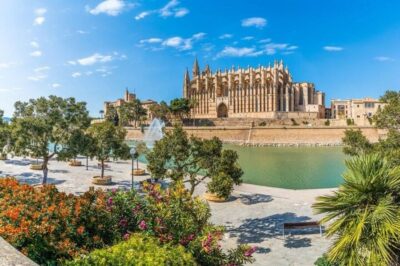
Browse the lists this tour appears in