
Reviewed · VALLDEMOSSA & SóLLER TOURS
Mallorca: Carthusian Monastery Valldemossa Entrance Ticket
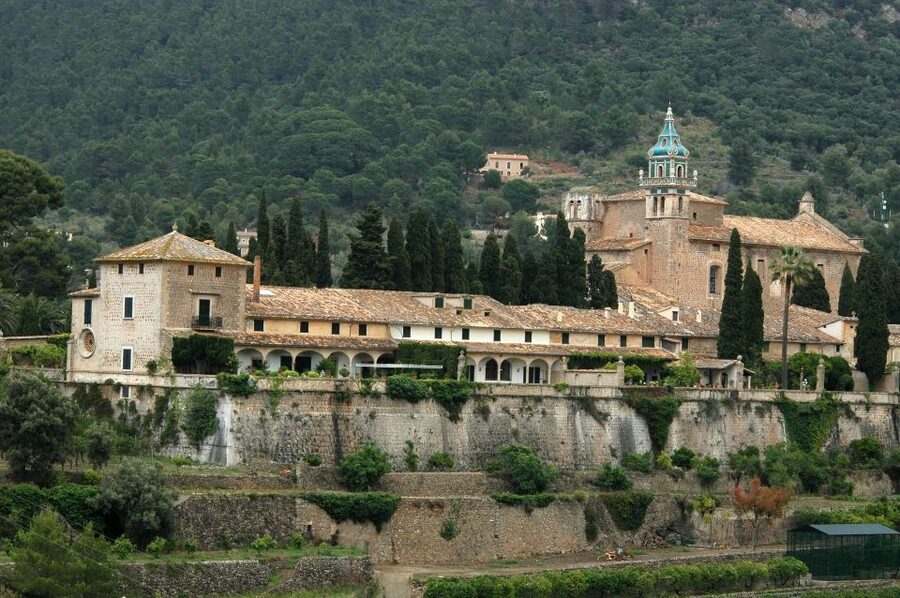
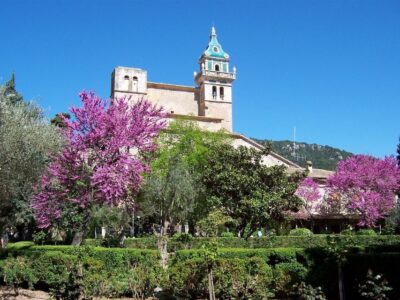
The Carthusian Monastery of Valldemossa is interesting because it is not just one building, it is a whole working world frozen in time. I love the Royal Charterhouse with its long, white-arched corridor and the monk cells that shaped daily life for centuries. I also like the surprise of the included 15-minute piano recital, which makes the calm grounds feel oddly alive. One heads up: parts tied to the Chopin story and the museum can require separate paid entry, so read carefully before you assume every room is covered.
You are visiting an enormous complex right on the edge of town, with a mix of royal residence, religious art, gardens, and collections that connect Mallorca to major European names. I find the views from the terraces are worth planning around, especially if you like seeing landscapes as part of the history. The main drawback is practical, not poetic: the site can feel a bit maze-like, so a ready audio guide helps you stay oriented and not miss key rooms.
Key Things I’d Prioritize on This Ticket
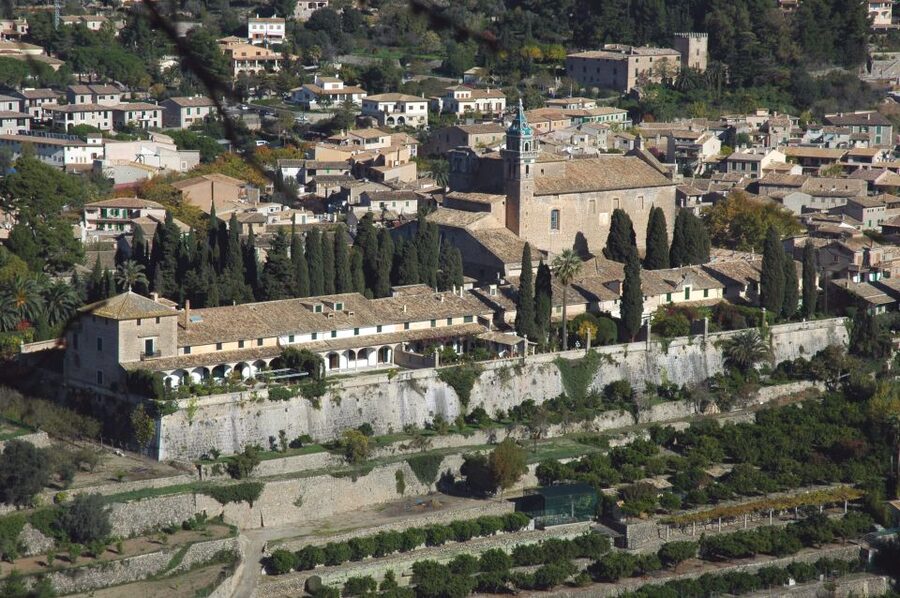
- Royal Charterhouse and King Sancho’s residence (Palace dating to 1309)
- Church frescoes by Bayeu, known as Goya’s brother-in-law
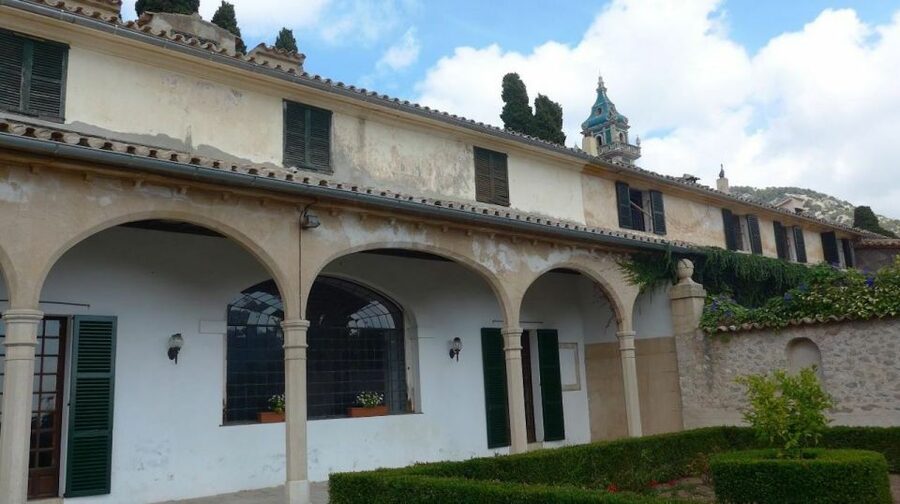
- Monk corridor with white arches and cells used for 400 years
- The famous Cell No. 2 connection that many people come specifically to see
- Gardens and terraces with valley views that change how the whole visit feels
- Art and collections, including Joan Fuster, a 16th-century printing press, and works tied to Archduke Ludwig Salvator
Valldemossa Monastery Ticket: What You Get for Your Hour
This is a straightforward entry ticket experience at the Carthusian Monastery of Valldemossa, about 20 minutes from Palma. Your visit runs about 1 hour (you pick from available start times), and you start by coming right to the entrance in Valldemossa’s main square. At the end, you simply exit back at the meeting point.
What makes this ticket feel like more than just “walking through an old church” is the variety packed into the grounds. You will move from palace-era spaces to a frescoed church, then into the quiet, formal layout of monk cells. Along the way you get gardens, a pharmacy space with old tools and medicines, art rooms, and even printmaking pieces tied to a 16th-century press. It is one site, but it tells multiple chapters of Mallorca and European culture at once.
More Valldemossa and Sóller day tours:
- Mallorca: Valldemossa & Soller Tour
★ 4.2 · 615 reviews - Alcudia/Marratxi: Valldemossa & Soller Tour by Tram & Bus
★ 4.7 · 499 reviews - Mallorca Full-Day VIP Tour: Valldemossa, Deià & Sóller Experience
★ 5.0 · 270 reviews
Included extras that matter
This ticket includes three things that upgrade the visit:
- Entrance to the monastery complex
- A downloadable audio guide app
- Piano recitals during your visit
That recital is not a distant event you have to chase. It is built into the experience as a 15-minute performance, and it tends to make the monastery feel less like a cold monument and more like an active room for music and reflection.
Arrive Ready: Audio Guide and Practical Setup
If you want to enjoy this without feeling lost, set yourself up for success before you step inside. The monastery’s audio guide comes via a free app called Cartoixa de Valldemossa, and it is available in Catalan, English, French, German, and Spanish. The site also has free WiFi in Valldemossa, but the smarter move is to install the app ahead of time, so you do not waste time once you are standing at the entrance.
Bring headphones and make sure your smartphone is charged. Those are not tiny tips, they directly affect your enjoyment. The monastery rooms and collections are spread out, and the audio guide helps you understand what you are looking at as you move from one space to the next.
A quick strategy for your one hour
Because your time is limited, you will enjoy it more if you treat the audio guide like your route planner, not background noise. Listen for the moments tied to:
- the royal residence (King Sancho and the early palace context)
- the church frescoes (Bayeu’s work)
- the monastic corridor and how cells were used for 400 years
- key art and printmaking rooms
- the Cell No. 2 story
When you do that, the whole visit clicks into place.
A few more Mallorca trips worth comparing
- Palma: Cathedral of Mallorca Skip-the-Line Entry Ticket
★ 4.6 · 14,386 reviews - Porto Cristo: Caves of Hams Entry Ticket
★ 4.2 · 6,548 reviews - Mallorca: Palma Aquarium Entry Ticket w/ Optional 3D Cinema
★ 4.5 · 2,280 reviews - Mallorca: Dinosaurland and Caves of Hams Combined Ticket
★ 4.5 · 1,167 reviews
Inside the Royal Charterhouse: King Sancho’s 1309 Palace
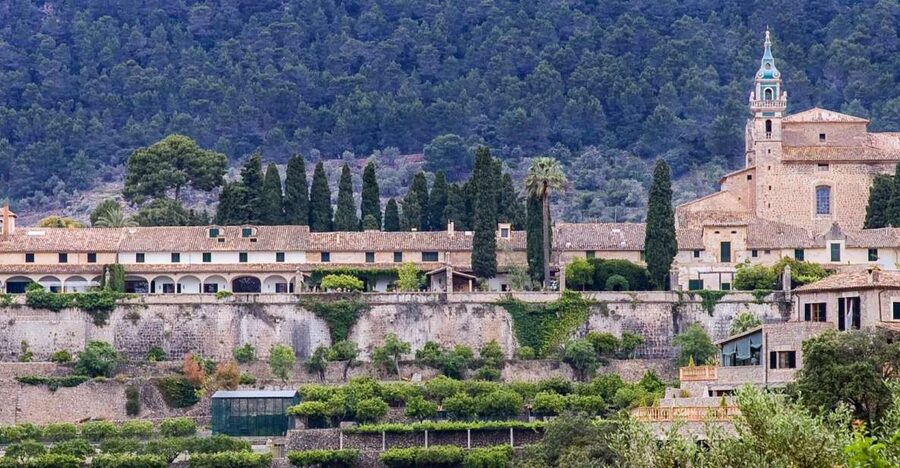
One of the biggest reasons this monastery makes a strong first stop is that it starts with power, not just prayer. You will see the former palace of a king dating back to 1309, connected to King Sancho of Majorca. Even if you are not a “medieval palace person,” the shift from royal residence to monastic life helps you understand why this complex is built the way it is.
The palace setting also sets up a key idea: monasteries are not always isolated caves of quiet. They were political, artistic, and economic places too. That matters here because the monastery keeps layering new stories onto old walls.
Bayeu’s Church Frescoes and the Art You Can Actually Interpret
From palace spaces you move into the church, where the art takes center stage. This church includes frescoes by Bayeu, who is famously the brother-in-law of Goya. That name recognition is useful, but the real value is how the monastery uses artwork to create atmosphere. You are not just looking at decorative paint. You are seeing a religious space shaped by Spanish art talent.
The audio guide is especially helpful in the church area, because it gives context for what you are looking at and why it belongs to this monastery. If you like connecting art to geography, you will enjoy how the church fits the overall architecture, from stone and arches to the way light lands in the rooms.
The Monks’ Corridor: White Arches, Quiet Cells, 400 Years of Order
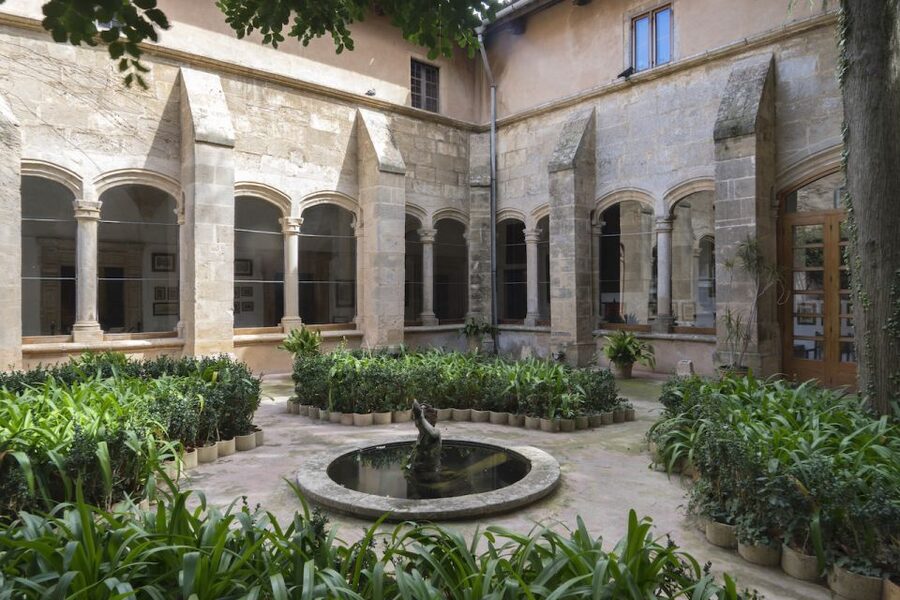
Then you hit the heart of the monastic layout: a long corridor with white arches, leading to monk cells. This is where the monastery’s design really shows its purpose. You are looking at an environment made for rest and peace, and the corridor layout is the physical form of that idea.
The story here is long and simple: the cells were used for about 400 years so monks could find peace and rest. In practice, this section of the visit can feel emotionally different from the palace and church. It is more austere. It asks you to slow down.
What to do here
Turn off the rush. Take a breath. If you are the type who likes “one good photo,” aim for one meaningful view down the corridor rather than trying to document everything. The architecture is repetitive, by design, and the repetition is part of what makes it powerful.
Gardens and Terraces: Where the Valley Becomes Part of the Story
You do not stay indoors the whole time. The monastery has gardens and terraces, and the views over the Valldemossa valley are among the most memorable parts of the complex. This is not just a scenic break. It is part of why the monastery worked: a place of quiet with a wide horizon.
If the weather is good, plan a short pause here, even if your one hour feels tight. You can listen to audio segments from earlier or later rooms while you enjoy the landscape. It helps you connect the human scale of monks and kings to the larger island geography.
The Old Pharmacy and Cell No. 2: Small Rooms With Big Atmosphere
Two stops stand out for people who like details.
First is the old pharmacy, where you can see ancestral utensils and medicines. This is one of those rooms that makes you think about everyday life in a world without modern healthcare. Even if you do not read every label, the objects give the monastery a human texture.
Second is Cell No. 2, which is a named highlight of the visit. This is one of those places where the monastery becomes personal, even if you did not come for a biography. You feel that this complex is not only about architecture. It is also about time spent, and how a single room can symbolize a larger story.
Art Collections, Joan Fuster, and the Printmaker’s 16th-Century Press
After you’ve absorbed the quieter monastic spaces, the monastery switches gears into collections. You will see art collections featuring Spanish and local painters, including Joan Fuster. That mix helps you see Mallorca not as a cultural island bubble, but as a place that drew and produced major art.
You also get a look at a 16th-century printing press and a woodcut collection. Printmaking is not always high on visitor lists, but here it makes sense. A monastery is a place of records, copying, and preserving knowledge. The press and woodcuts give you a tangible link to how information moved long before phones and museums put everything behind glass.
If you care about craft, this section is a nice balance to the religious art you saw earlier. It shows the monastery as an engine of culture, not only a site of worship.
Archduke Ludwig Salvator and the Sissi Connection
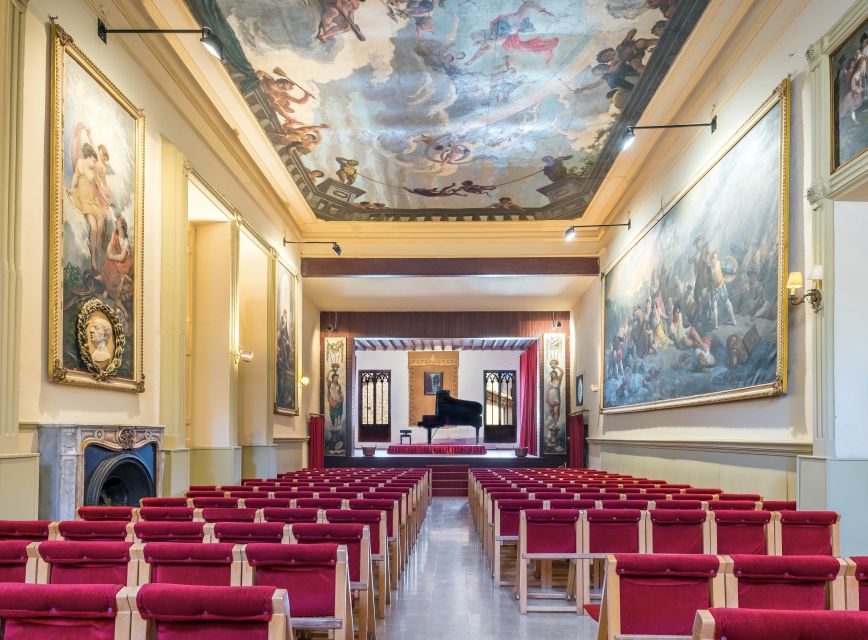
Another collection ties the monastery to European nobility: a set connected to Archduke Ludwig Salvator of Austria, cousin of Empress Sissi. He came to Mallorca with his steamship and fell in love with this part of the island.
That detail sounds like a movie trailer, but it also explains a real cultural pull. The monastery has attracted attention from visitors of status over time, and the presence of this collection helps you see how Mallorca’s “special place” reputation spread beyond Spain.
If you like travel stories where the island connects to bigger historical networks, you will enjoy this part. It breaks the visit out of strict “local history only” mode.
Chopin, Sand, and the Extra-Ticket Reality
Here is the one tricky part to plan for: the Chopin connection is a major draw. The visit can involve additional paid access for specific rooms connected to Chopin and Sand, such as the room where Chopin lived with Sand, plus a museum option. That means your one hour might not cover everything you have heard about, unless you pay for the extra parts separately.
I recommend you decide in advance what matters most:
- If your priority is the architectural and art highlights, the included entry covers a lot.
- If you specifically want the Chopin-linked rooms and the museum spaces, budget extra time and money so you are not caught off guard.
This is also why the site can feel confusing. When some rooms are included and others cost extra, it is easy to lose your focus. A good audio guide helps, but your own priorities matter more.
Price and Value: Is This $14 Ticket Worth It?
At about $14 per person, this ticket is strong value for Mallorca, mostly because it bundles several types of interest into one pass: monastery architecture, key art stops, collections, and an included 15-minute piano recital.
Is it a bargain? It can be, if you come with a flexible mindset. You are getting more than a church visit. You are getting a full complex with multiple “zones,” including corridors, gardens, and museum-like rooms with collections and print history. For an hour, the variety is the value.
The watch-out is the separate payments for certain Chopin-related rooms and the museum. If those are your top reasons for going, your total cost may rise. Think of the base ticket as the foundation, not the full package of every possible add-on story.
Who Should Book This Monastery Ticket
This is a great fit if you want:
- a compact, high-impact history stop in Valldemossa
- religious art and Spanish artists you can connect to places
- architecture-focused sightseeing with quiet mood built in
- a piano moment that does not require extra ticketing
It is also ideal if you like self-paced travel, because you use the included audio guide and move at your own pace inside the 1-hour window.
If you hate timed, structured visits or you dislike audio guides and prefer a purely guided, conversational explanation, you might find the experience harder to navigate. The site is beautiful, but you still need your bearings.
And if you are driving, keep in mind that parking in Valldemossa can be restricted, often for residents only, so plan for that if you are not coming from Palma.
Should You Book the Carthusian Monastery of Valldemossa Ticket?
Yes, if you want a real sense of place in a short amount of time. This ticket gives you a powerful mix: Royal Charterhouse rooms, the church with frescoes by Bayeu, the monastic corridor with centuries-old cell layout, the gardens and terrace views, and the added emotional lift of the piano recital. Even with potential add-on costs for Chopin-linked rooms and the museum, the included content is substantial.
Book it if you like architecture, art, and quiet storytelling. Skip it only if your entire goal is one specific Chopin room or you cannot handle an experience where some parts may cost extra.
FAQ
Where is the meeting point for the Valldemossa monastery entrance ticket?
You come directly to the entrance on the main square of Valldemossa.
How long does the visit last?
The duration is about 1 hour. Start times depend on availability.
What is included with the ticket?
The ticket includes entrance, a downloadable audio guide app, and piano recitals.
Is the audio guide included, and what languages are available?
Yes. The audio guide app is included, and it is available in Catalan, English, French, German, and Spanish.
Is there a piano recital during the visit?
Yes. There is a piano recital that lasts about 15 minutes during your visit.
What should I bring with me?
Bring headphones and a charged smartphone for the audio guide.
Are food and drinks included?
No. Food and drinks are not included.
Is accommodation pickup or drop-off included?
No. Pickup and drop-off are not included.
Recently reviewed around Mallorca
- Guided Kayak & Hike from Sant Elm to Sa Dragonera★ 5.0 · 28 reviews
- Western Water Park, Entrance tickets★ 4.0 · 30 reviews
- Sailing Flavors, Gastronomy and Relaxation at Sea★ 5.0 · 15 reviews
- 60 minutes Jetski Rental in Alcudia Bay★ 4.5 · 33 reviews
- Yoga and Brunch on the beach★ 5.0 · 9 reviews
- Wine tasting with wines from the smallest wineries in Mallorca★ 5.0 · 10 reviews
- Sa Clasta Wine Tours, Mallorca★ 4.5 · 20 reviews
- Western Water Park Day Trip from Mallorca★ 3.5 · 6 reviews
Valldemossa & Sóller Tours, compared.
Alcudia/Marratxi: Valldemossa & Soller Tour by Tram & Bus
Read our review →
Mallorca Full-Day VIP Tour: Valldemossa, Deià & Sóller Experience
Read our review →
Valldemosa and Valley of Soller Tour in Mallorca
Read our review →
Palma, Cathedral & Valldemossa: Guided walking Tour
Read our review →
Palma de Mallorca Shore Excursion: Private Tour of Valldemossa, Soller and Serra de Tramuntana
Read our review →Browse the lists this tour appears in